
DAVID ROHN
Retrospective
April 3 – June 7, 2026
Opening Reception
Friday, April 3, 5-7pm
Director’s Talk
Saturday, May 2, 5pm
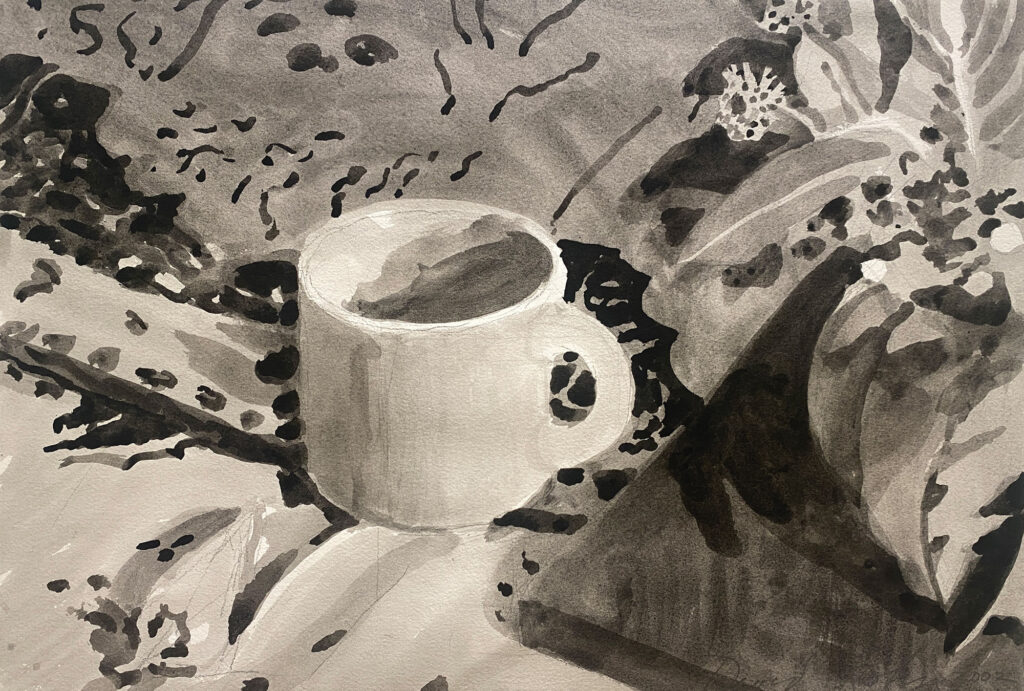
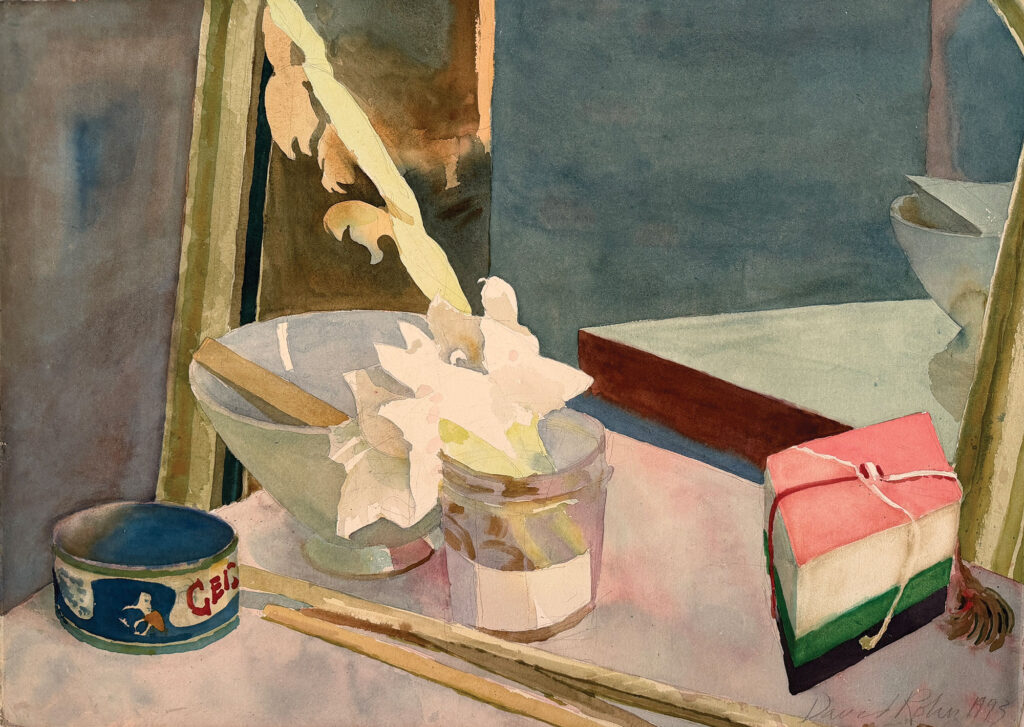
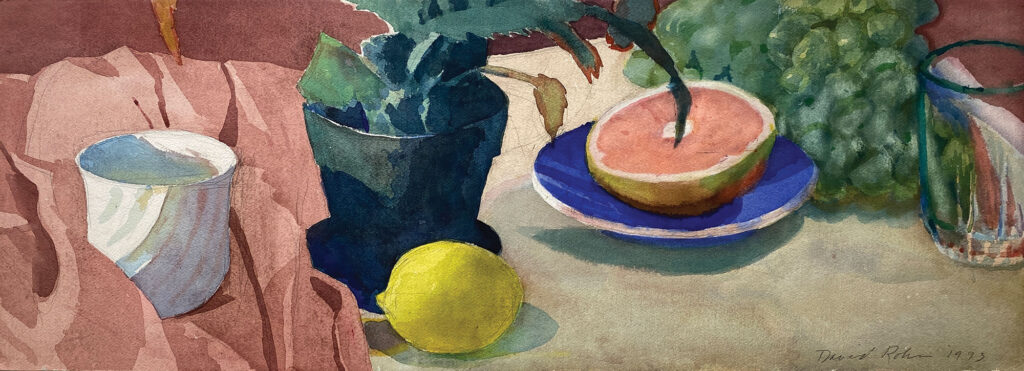
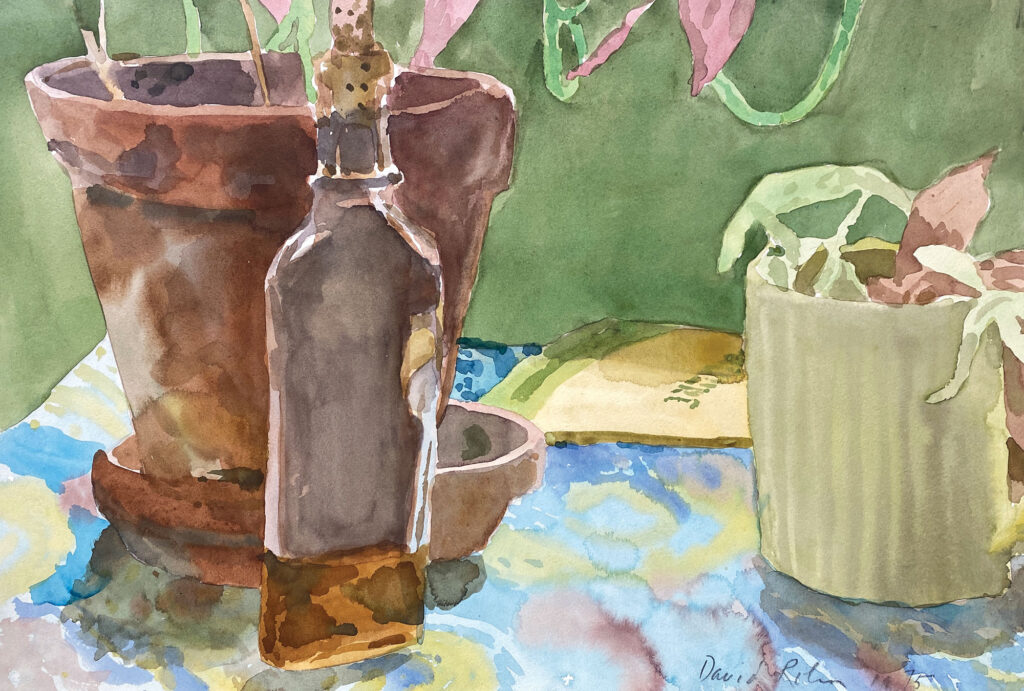
Mitchell • Giddings Fine Arts gave its first gallery-wide solo exhibit to David Rohn in March, 2017. The gallery was two and a half years old, and showing just one artist was a risky choice. We felt that the clarity and freshness of Rohn’s watercolors would energize and transform the space, but he gave us more. He brought insight and humor and a novel way of approaching painting. Rohn lived a simple existence close to the earth and the objects that informed his paintings. Bach, Beethoven and his hand-puppet companion Miss Tulip were as important to this visual artist as Cézanne and Matisse. As long as he could paint he was content—pleasure was found in the act of painting, not artistic invention, and watercolor provided Rohn the ”… freedom and liberation from an art world of expectation and judgment.” This can be found in multiple stacks of unsigned paintings, most with images on both sides. Often his chosen objects and compositions were delightfully hidden in plain sight, not demanding to be shuffled or rearranged; instead, it was he who would settle in, “… looking intently at a visual field … to organize the percept into patterns, symmetries, geometries.” We dearly miss this extraordinary artist and friend. ~ Petria Mitchell and Jim Giddings

David Rohn 1934-1925
David Rohn of Putney, Vermont passed away December 10th, 2025 at age 91. A passionate artist from a young age, Rohn made a name for himself all over the world as a prolific watercolor and oil painter.
“My way of painting derives from an intense reaction against art, or art as I was practicing it in the early 1970s. I had been an abstract artist for a decade or more … and hoped to awe the art world with my painting. Then I decided that the only art process I could endure, one free from theory, was what I experienced in my beginning drawing class. I switched from being active and scheming to make a great painting, to being passive and just receiving the motif … I changed to watercolor paper and began drawing, then painting the objects that were accumulating on my windowsills and counters at home. As I painted in the penciled outlines with watercolor, I realized as I worked I was looking at abstract arrangements in the overlapping puddles that have their own flow and assertions. Working from observation offers an endless variety of visual situations and requires prolonged intimate contact with plain stuff—a jar, an apple. I begin by gathering in. I yield to it. I play with what I have harvested, engaging in a dialogue between the parts … sometimes a dynamic equilibrium results—a perpetually self-charging energy source. It was psychologically tranquilizing.” Rohn’s Artist Page

“Rohn’s paintings seem part of another diction altogether, one free of jargon and its thin gratifications; free, also, of art-schooled ambition to please teacher/critic/dealer, but rarely the eye of the beholder. The eye of this beholder is soothed and delighted, reminded of the old sense of magic which manifests itself in art. I like to call it magic, or alchemy, since these words convey transformation: the way all true art, representational or abstract, changes the visual world into a vision of the world.” ~ Ann Lauterbach, Light Repositories: On David Rohn’s Watercolors
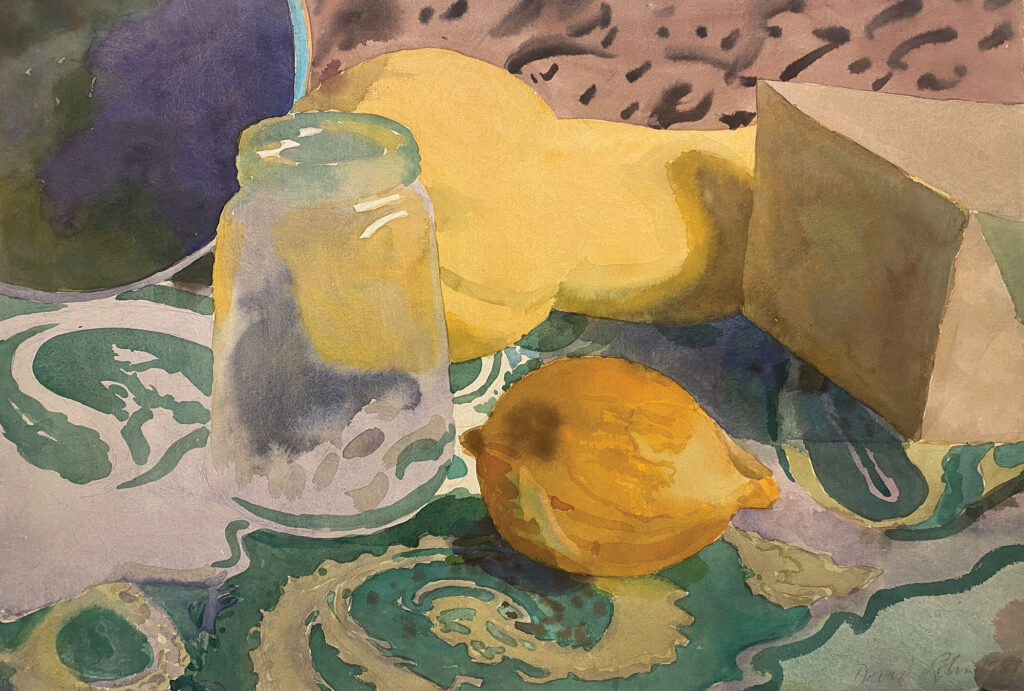
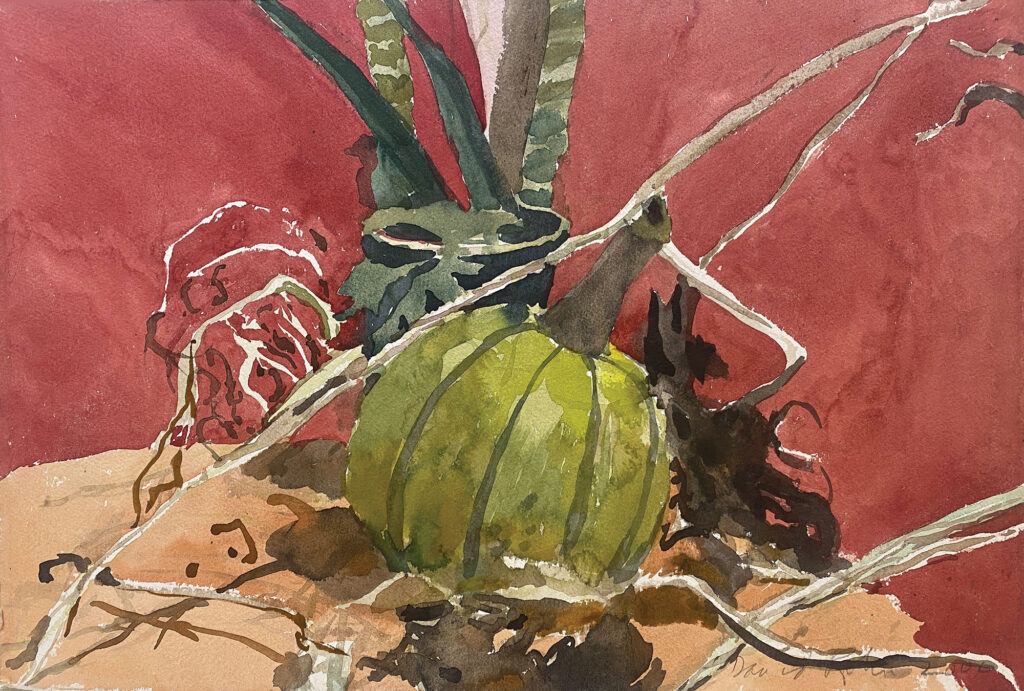
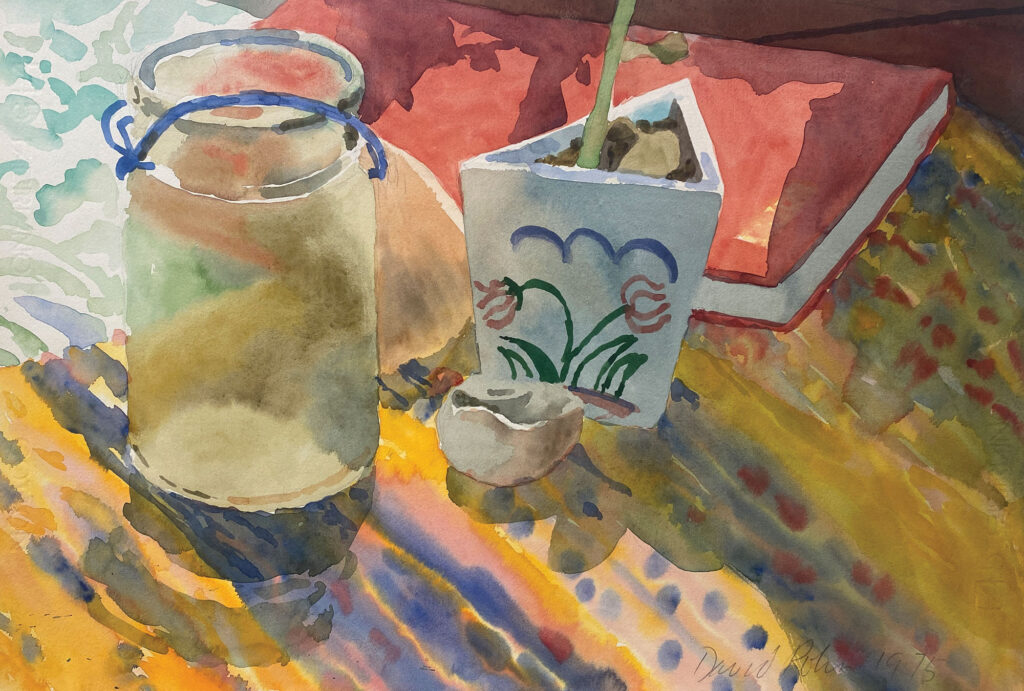
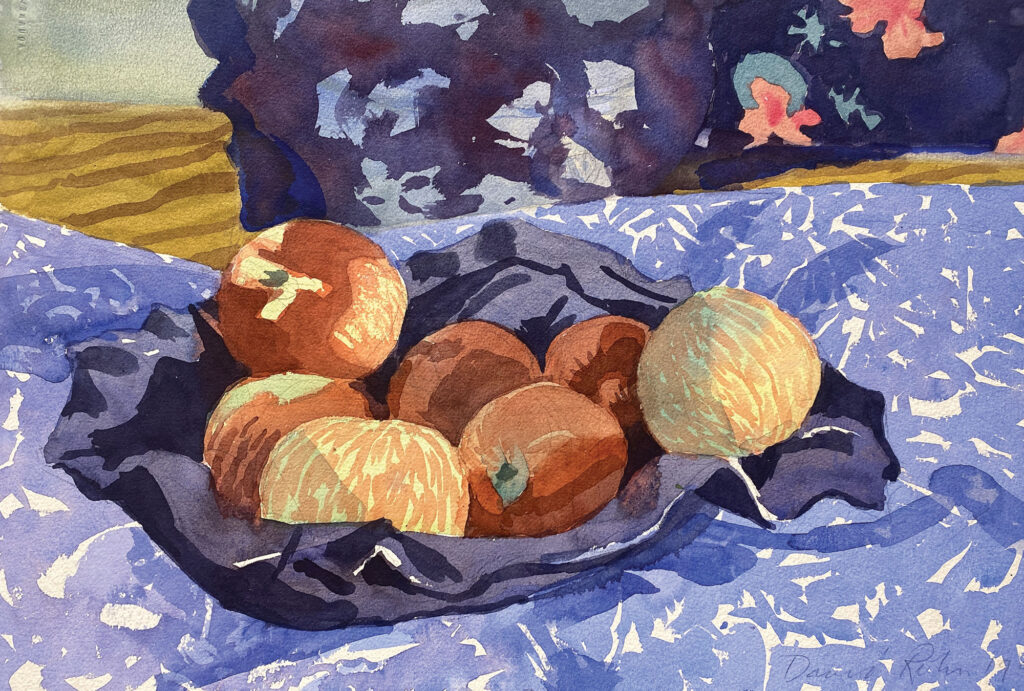
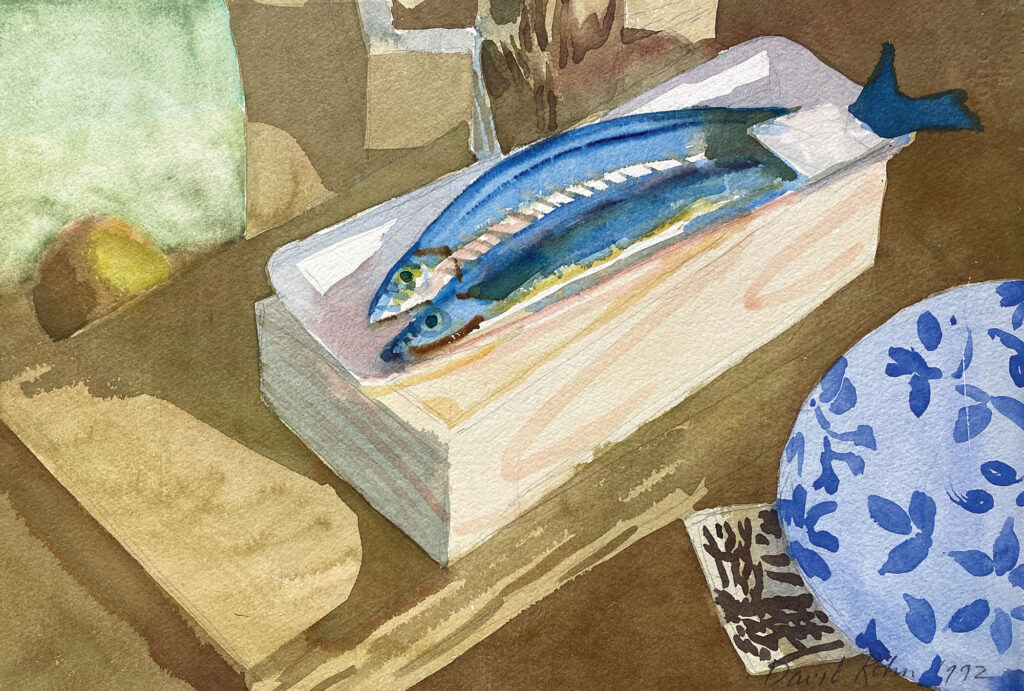
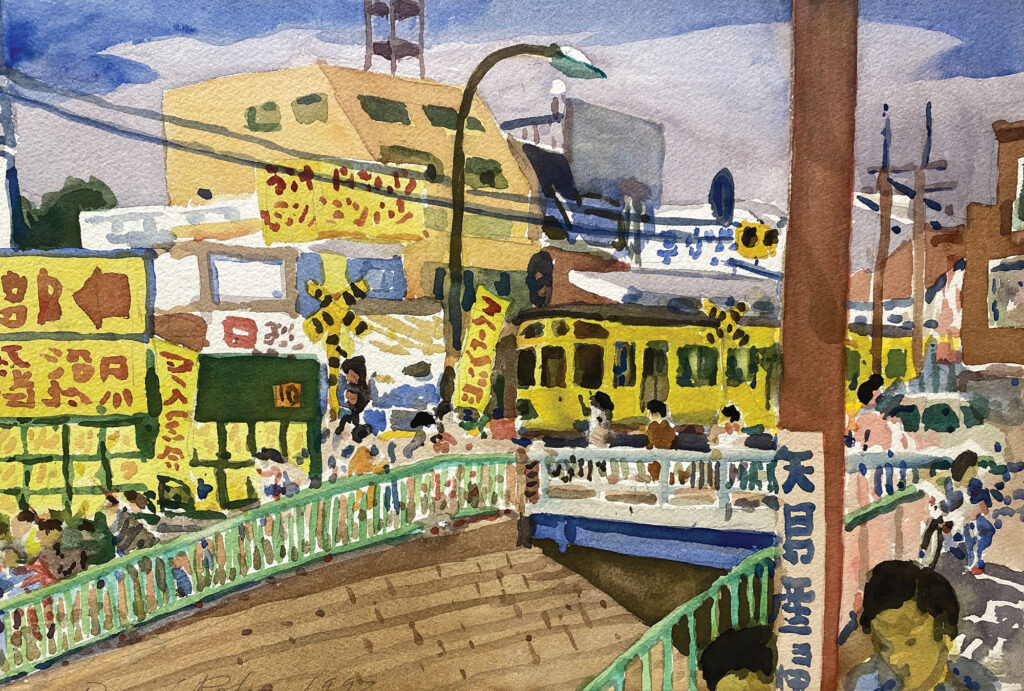
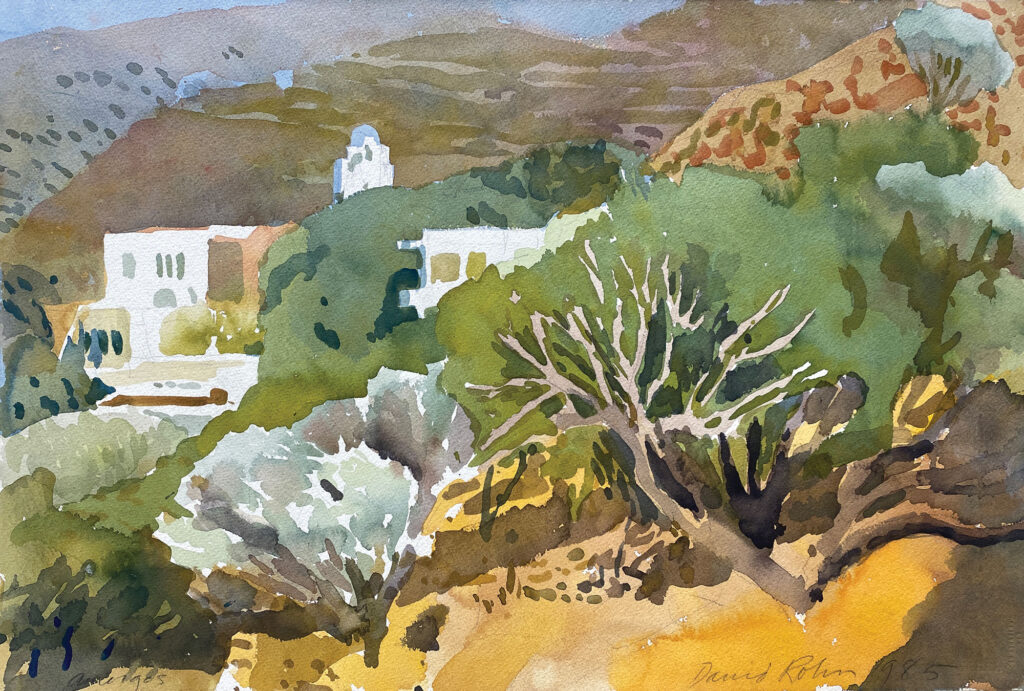
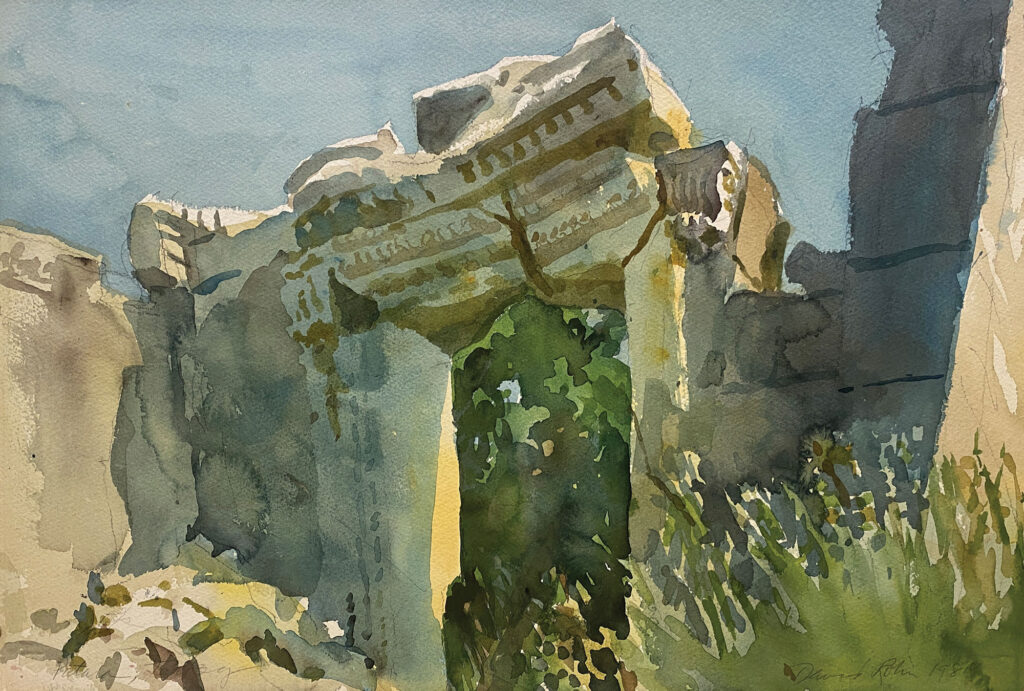
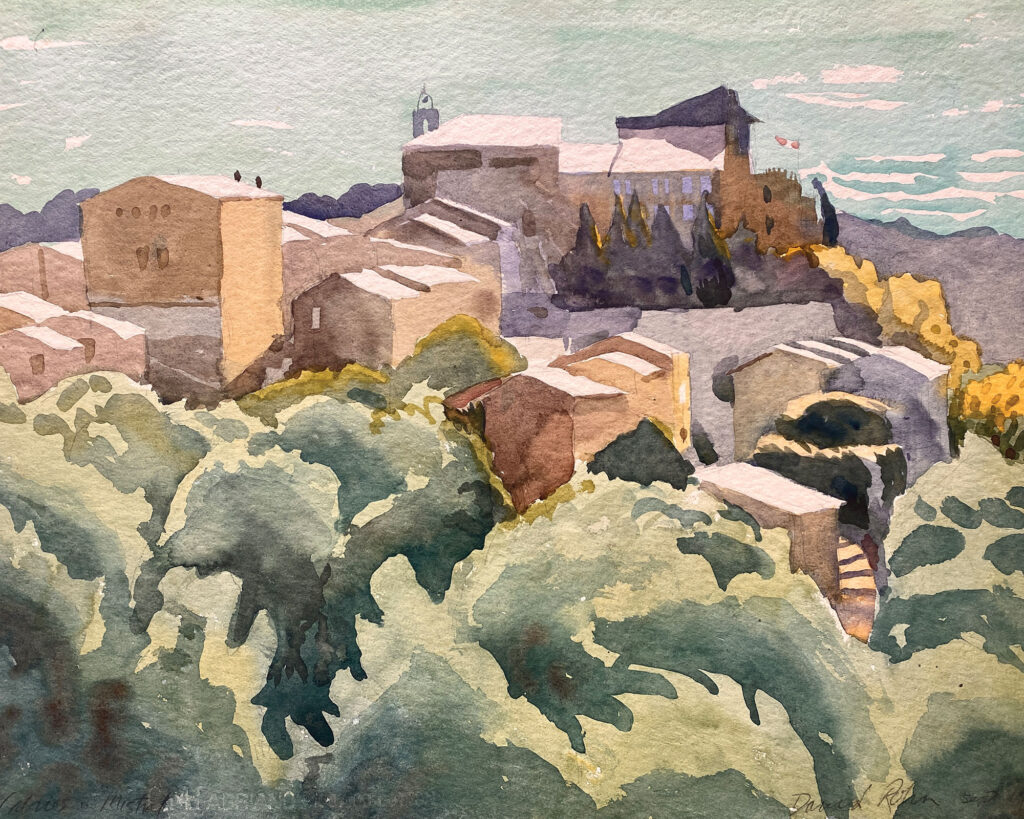
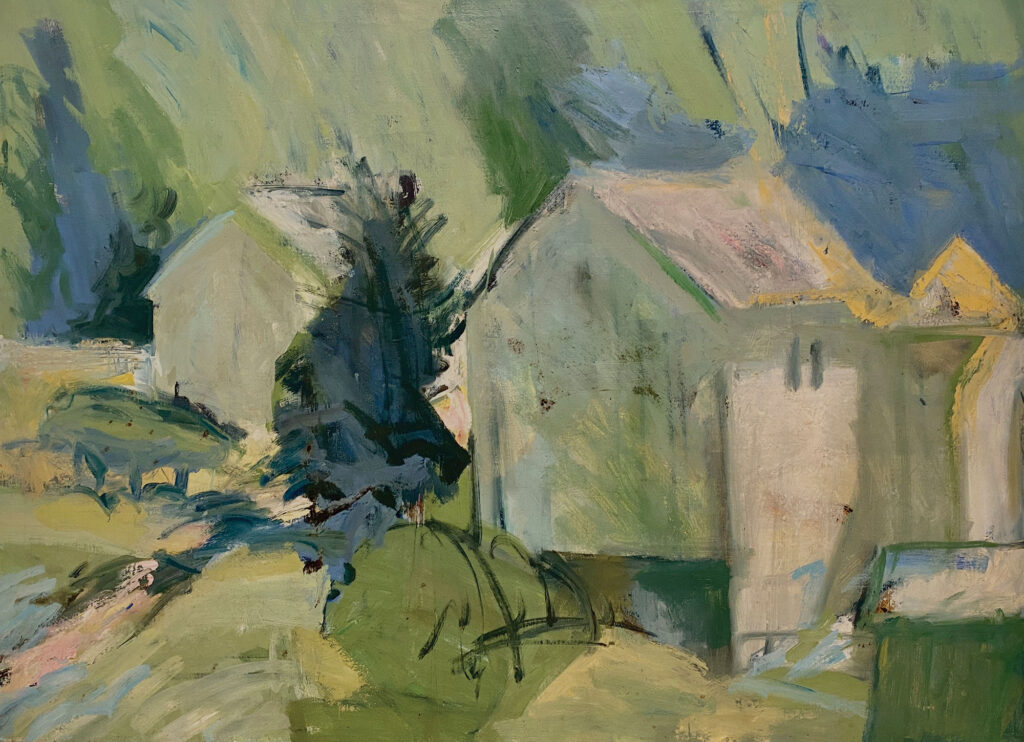
“… each picture having a highly articulate—but seldom outspoken—air. Yet when David Rohn gets right down to it, his very delicacy of means yields up something deeply felt and expressed. …. Rohn finds feeling; he is a still-life painter of surprising force.” ~ Gerrit Henry, Art in America
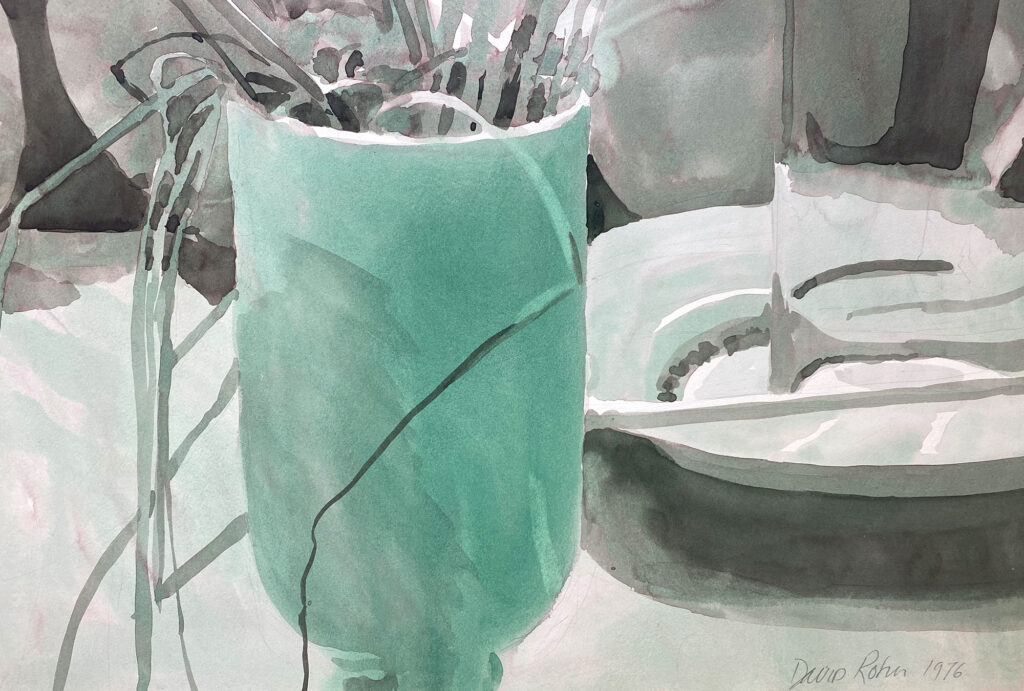
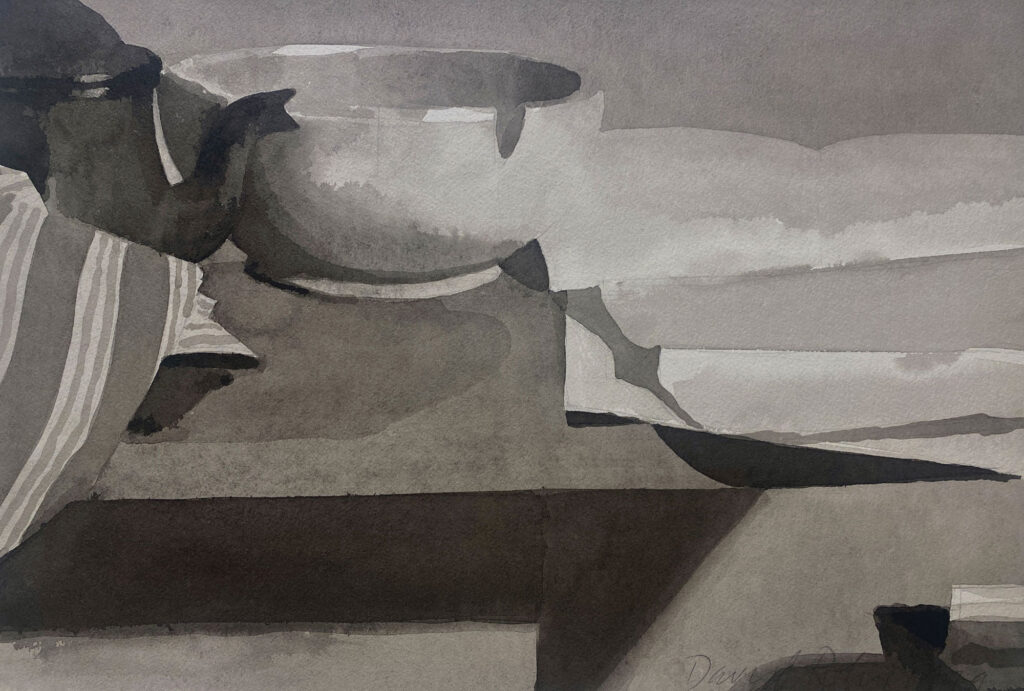
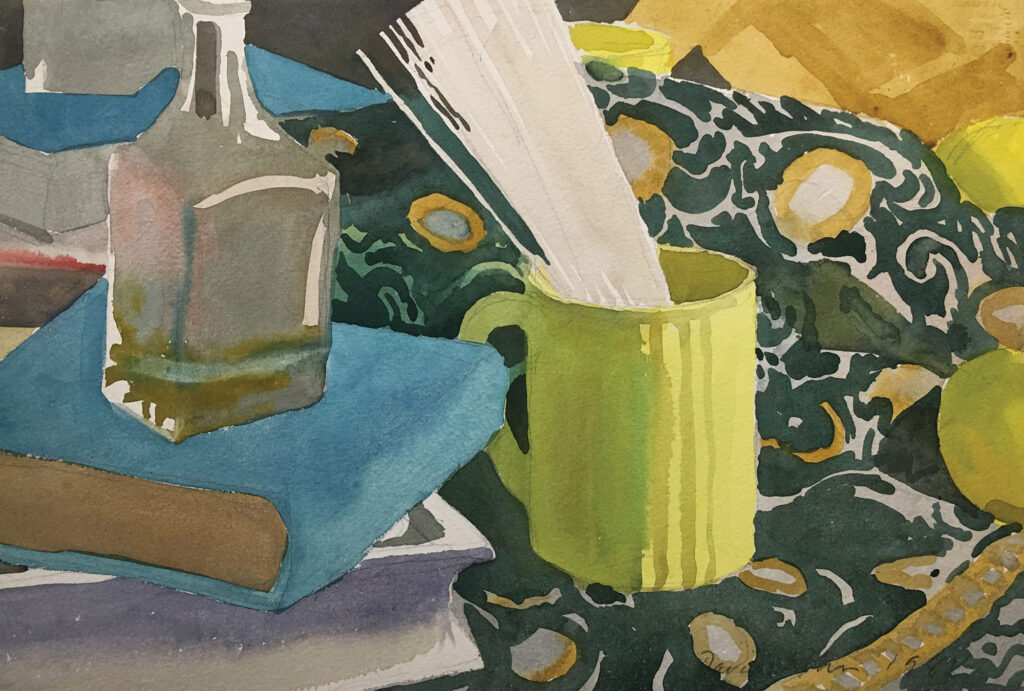
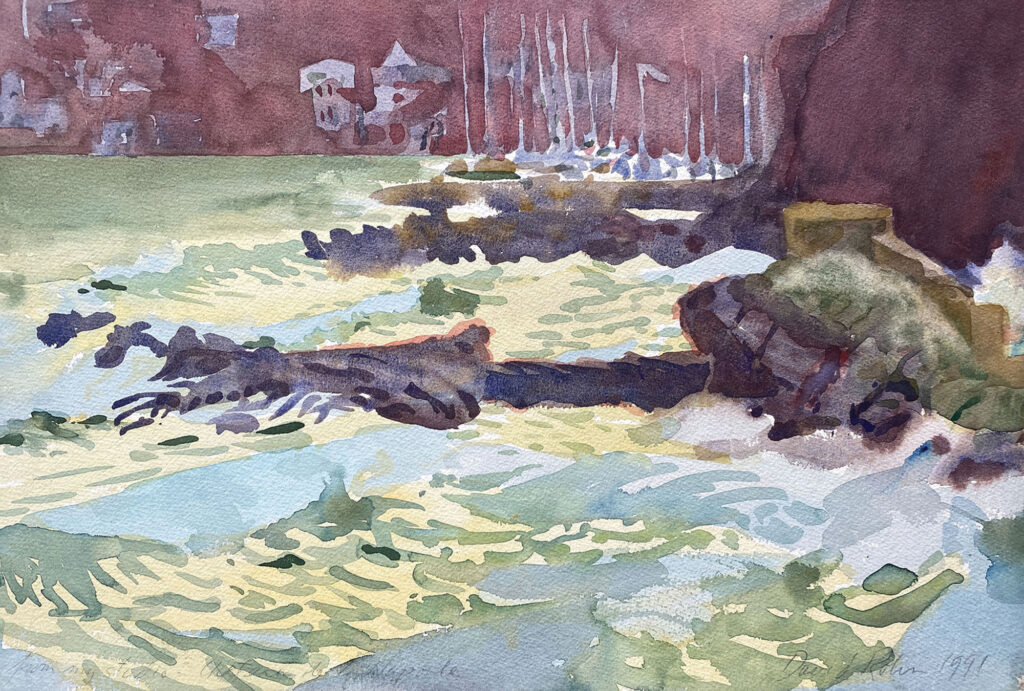
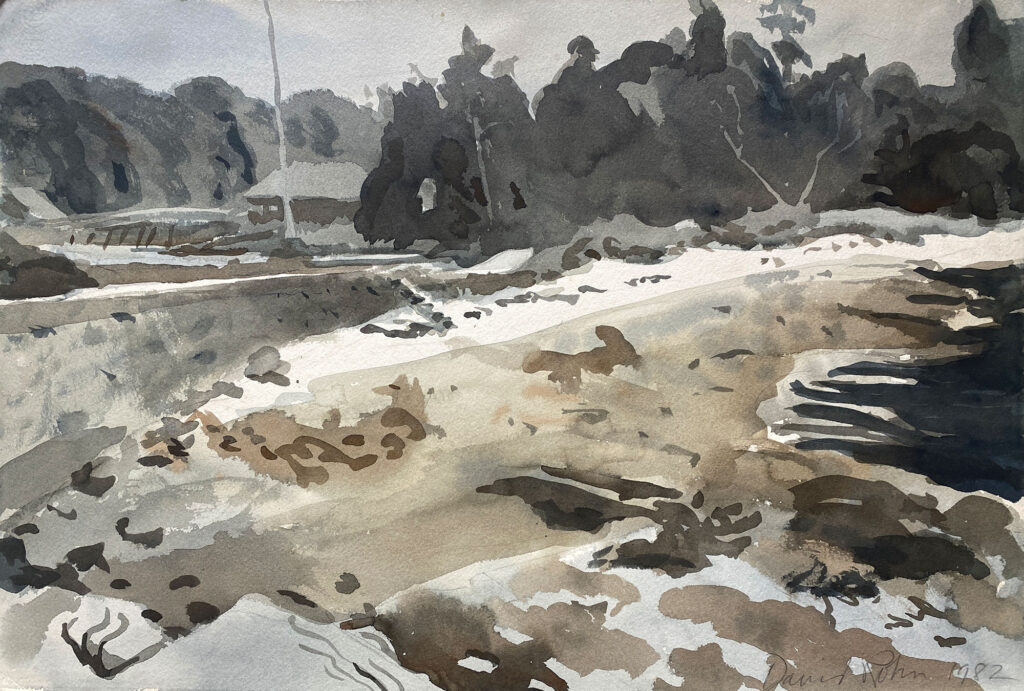
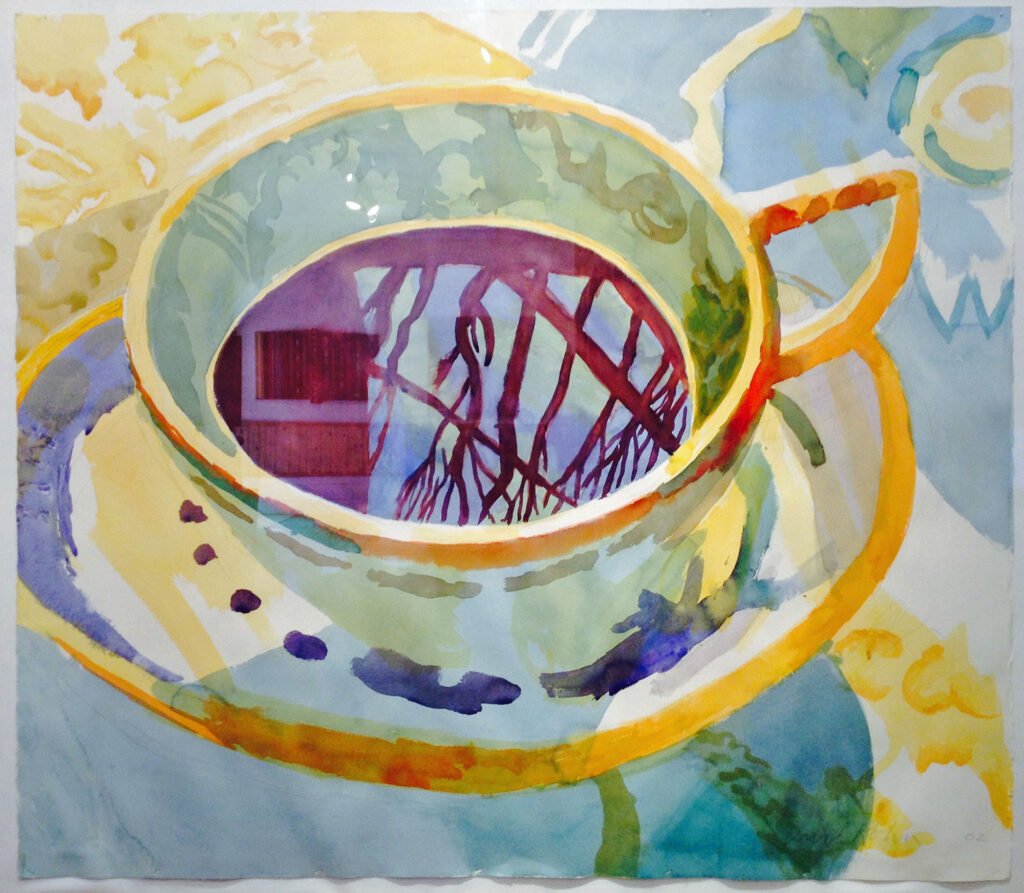
“At what I suppose is towards the end of a long life of just looking at things … It’s very much about the process … looking at still lifes. It’s a very interesting, intense situation for a human being to be just keeping company with a still life. The quiet hours, yes there’s an oddity in that, so there’s something in that process that is much more important than the result.”
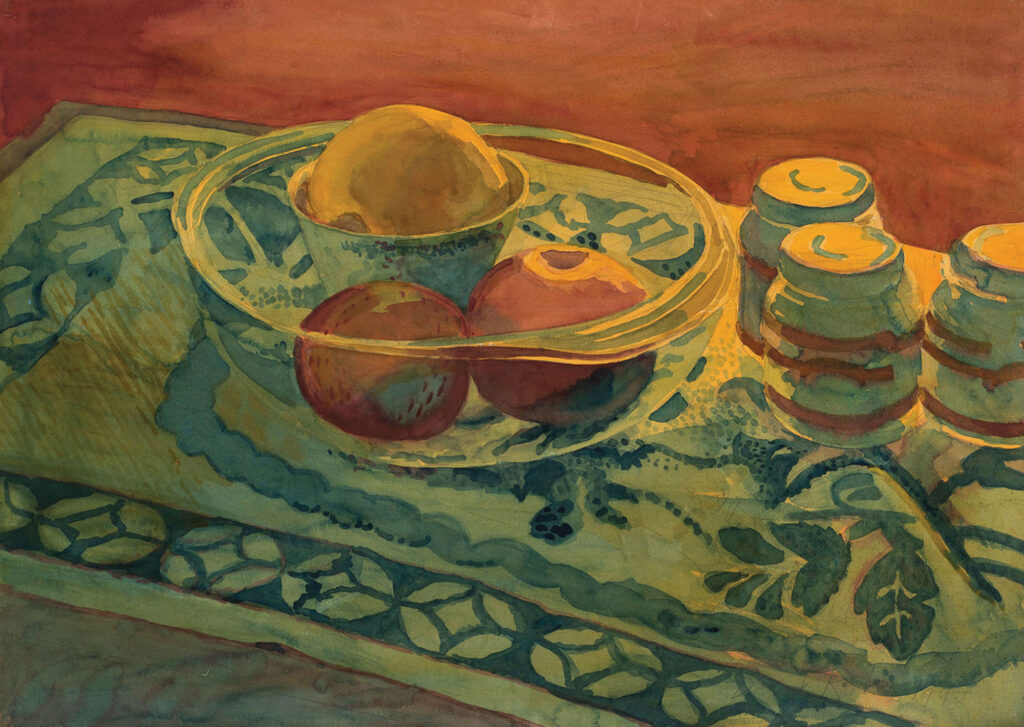
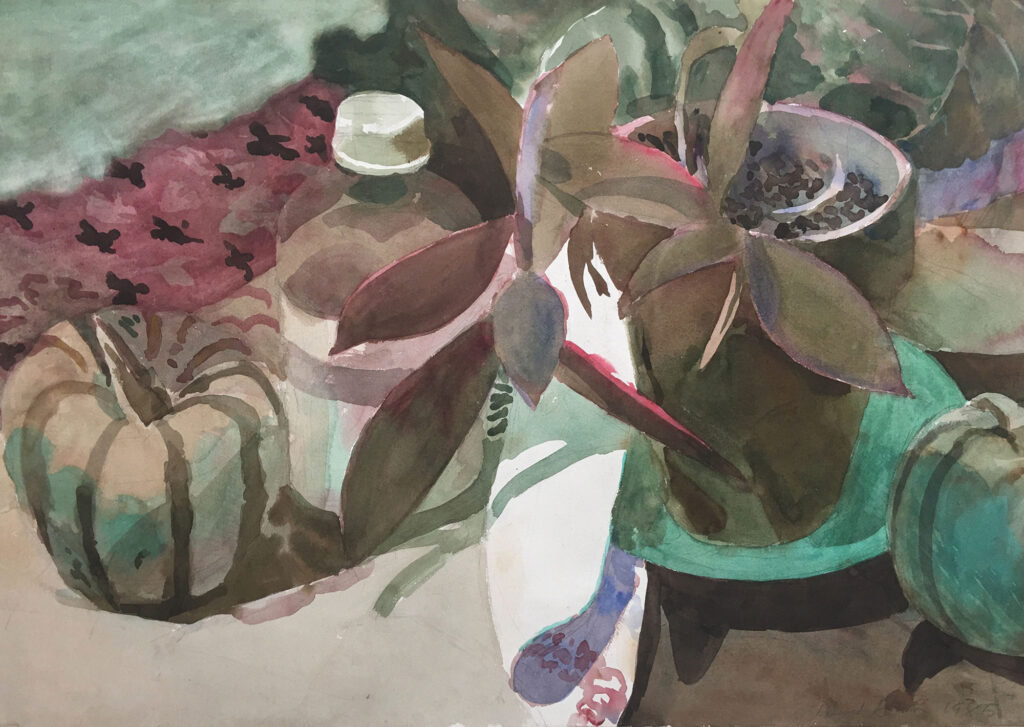
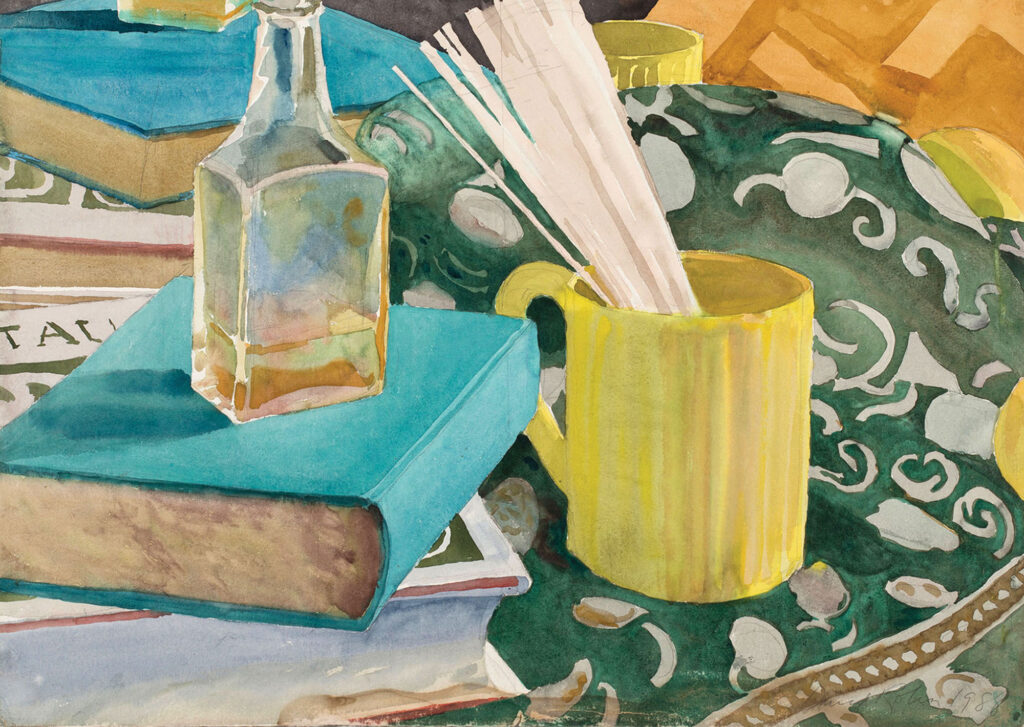
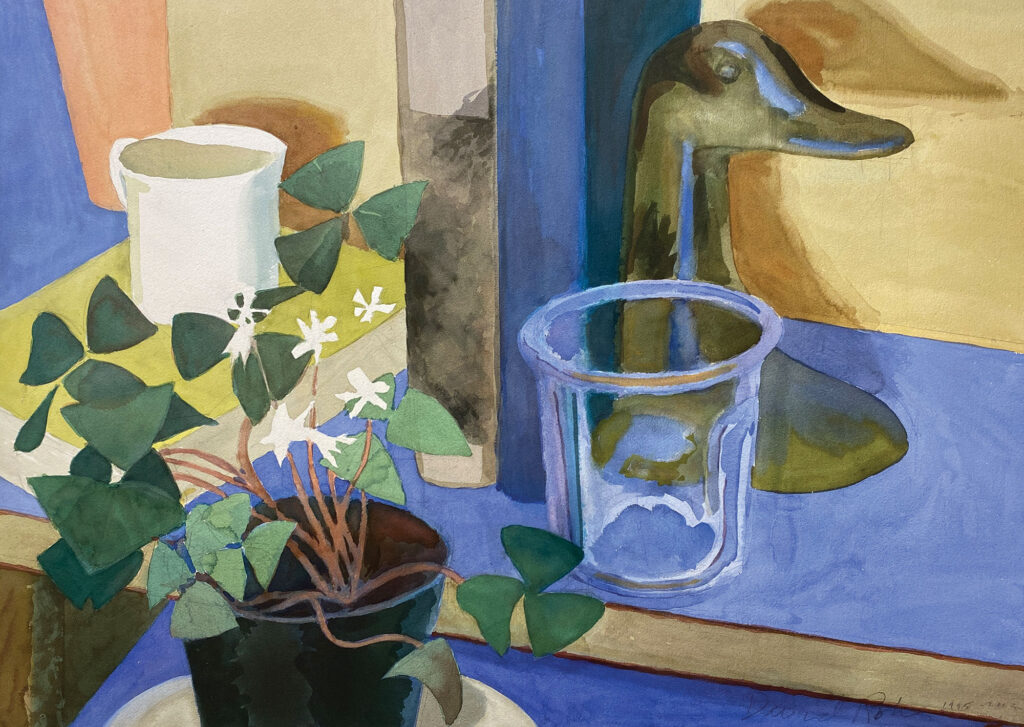
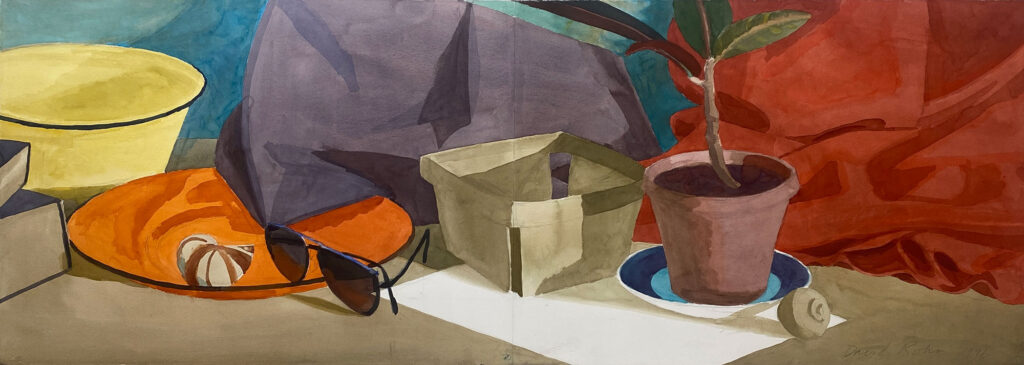
“Supervising a puddle takes all of your attention … I have the quiet, studious forces of just applying myself to looking at something and drawing. I also have the playful forces, I’m going to loosen up your reality. It says, let’s play with this a bit, do this, let’s make some puddles and see where that leads.”
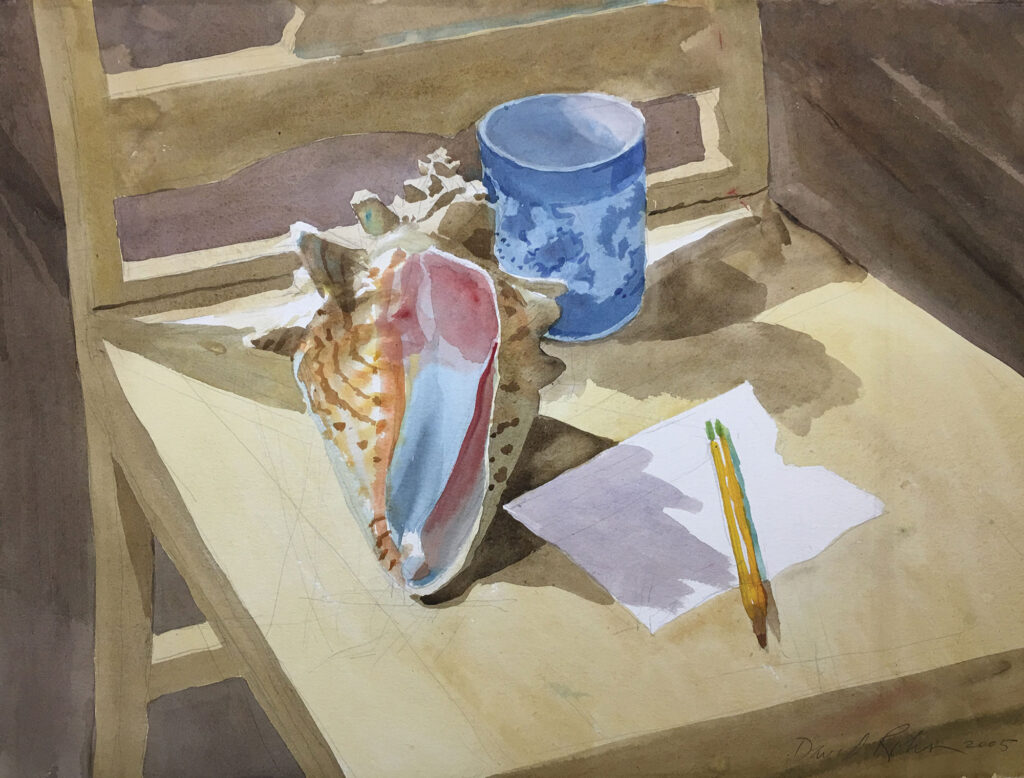
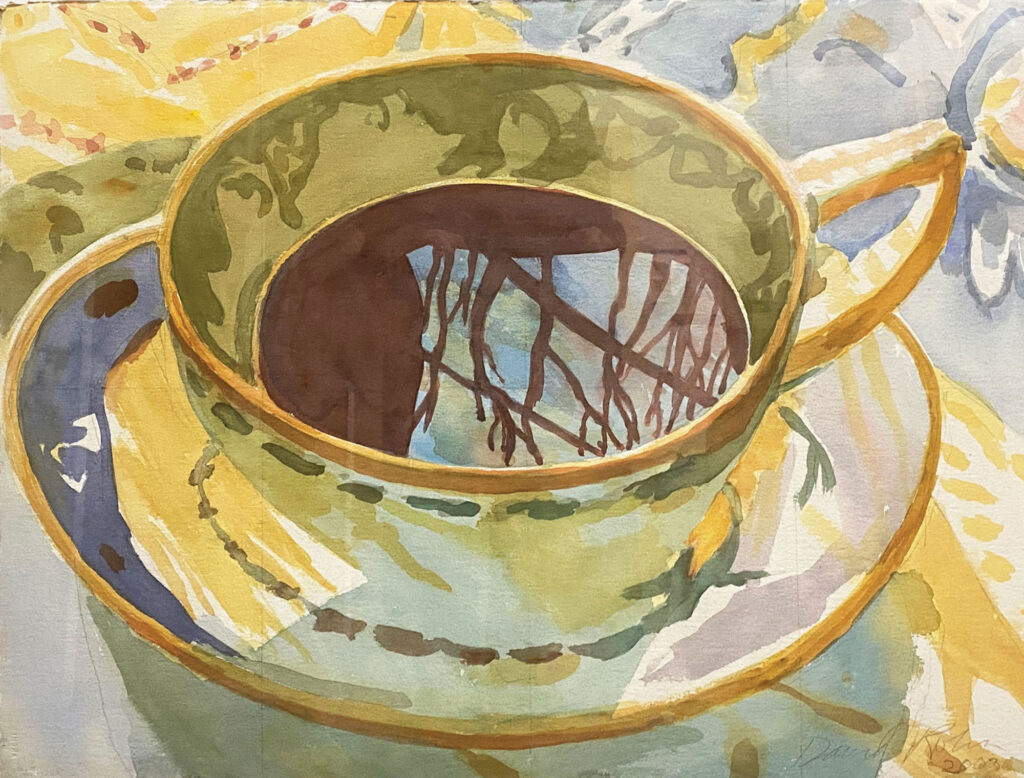
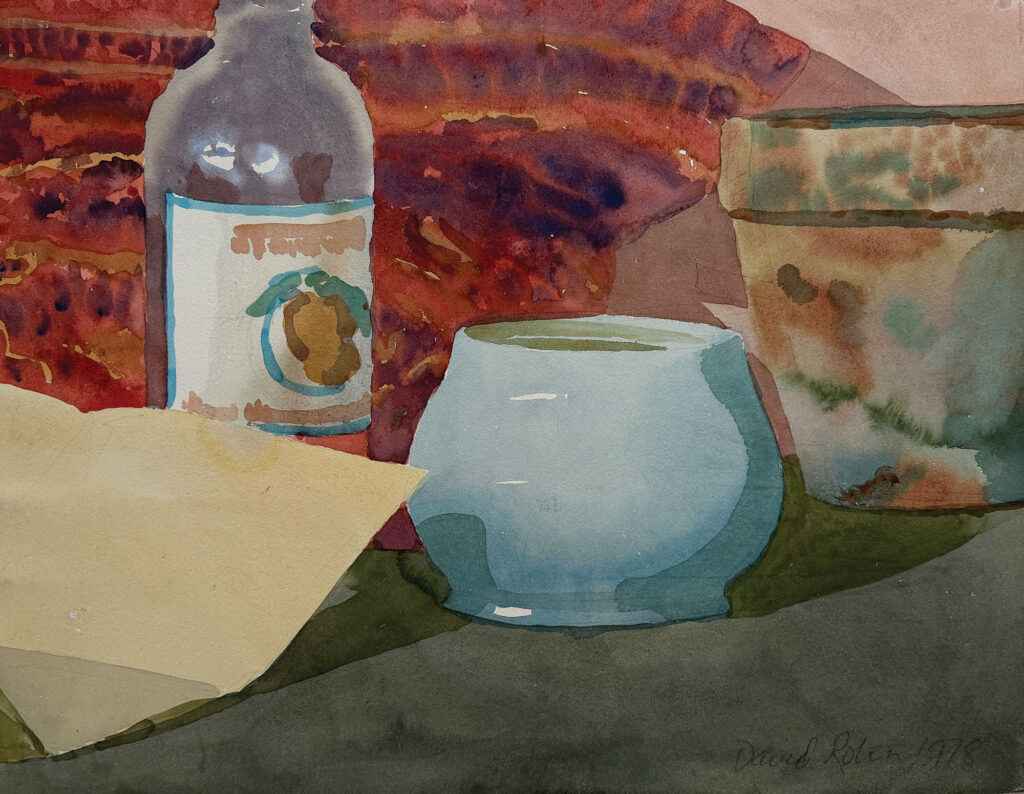
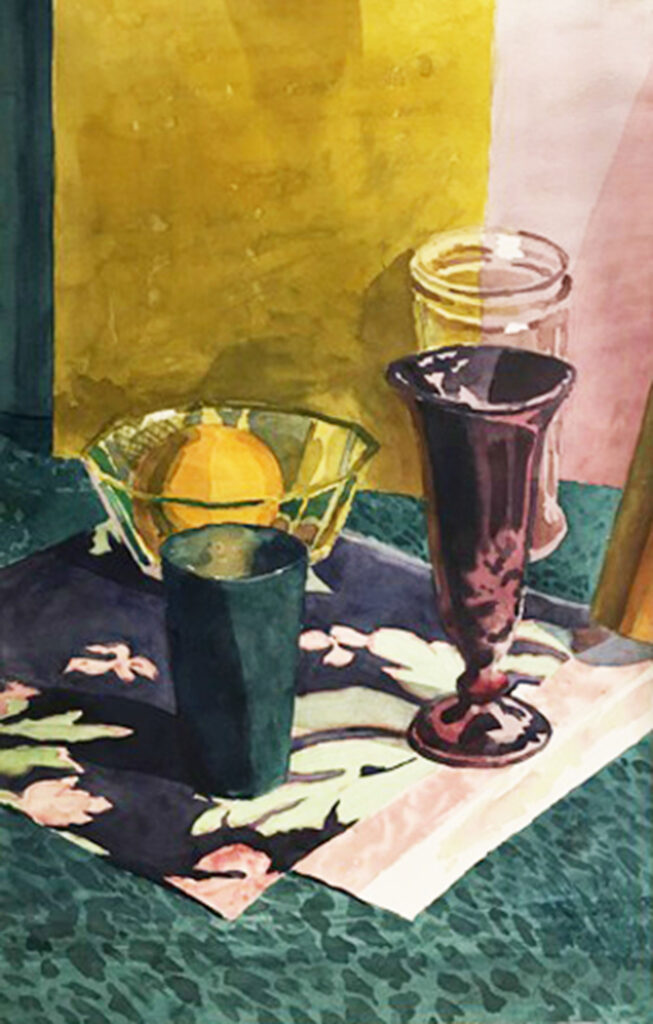
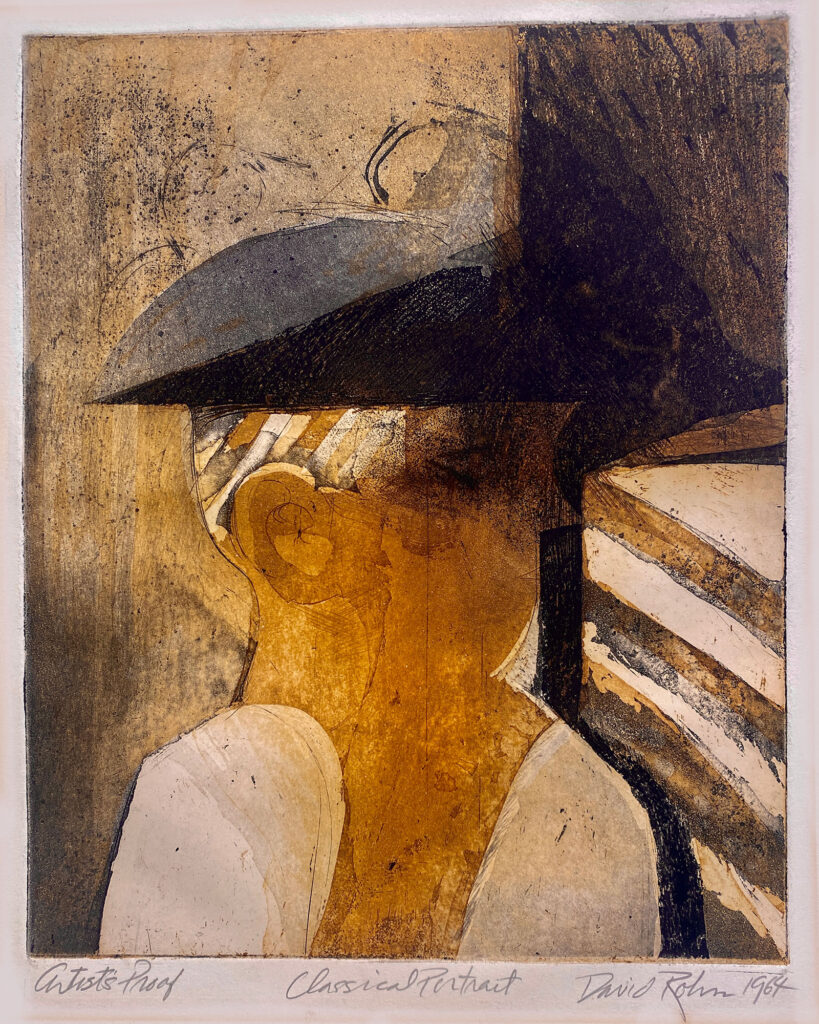
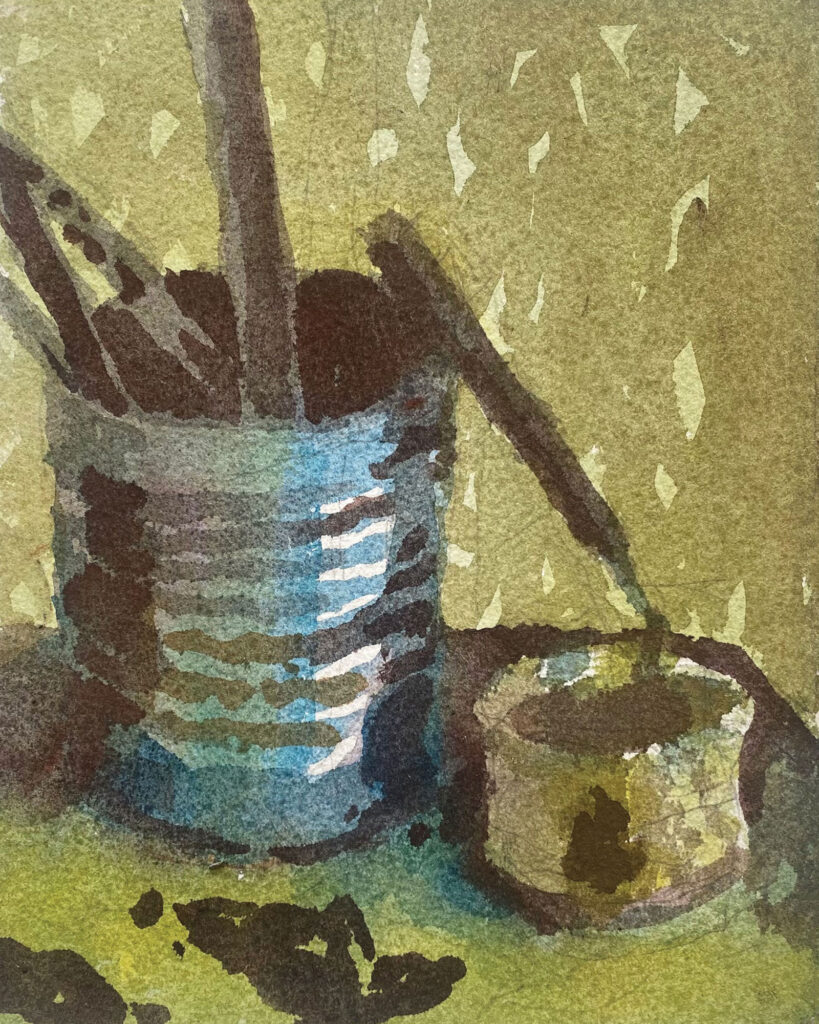
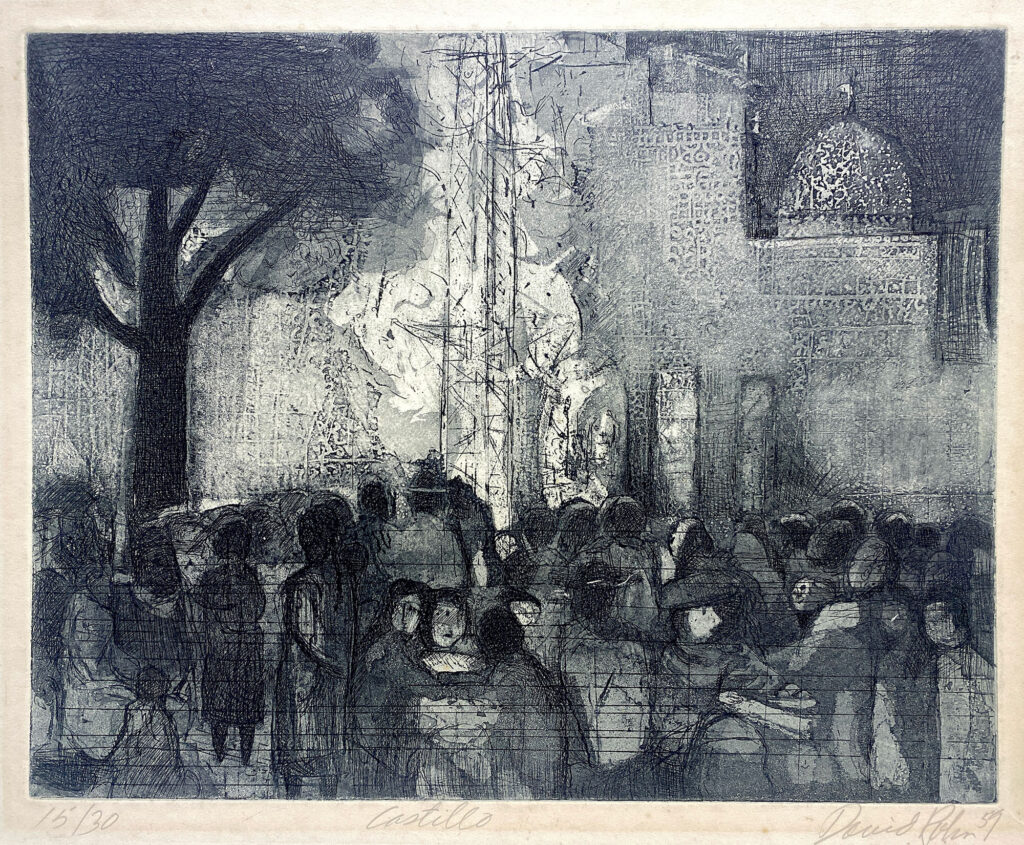
“I think a lot about Cézanne, in that raw situation of looking at a still life, and it is so scientific. I’m thinking, what’s going on here, there’s this still life, I see it in three dimensions. I have this two-dimensional thing I’m making the equivalent of, and here the experience I’m having of that is not as I’m seeing it. But I’m having an experience of how I can get it anyway. It’s a very quiet, mysterious sort of encounter, I don’t know where the mystery is. I don’t have to be able to explain what I do, I just have to do it.”
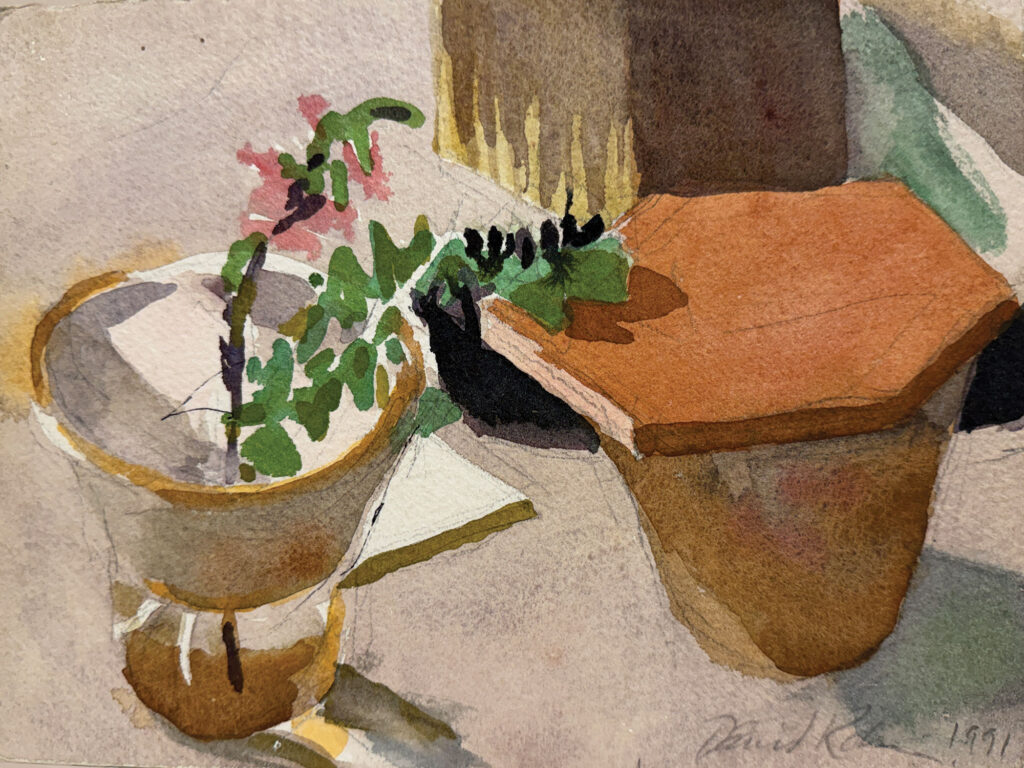
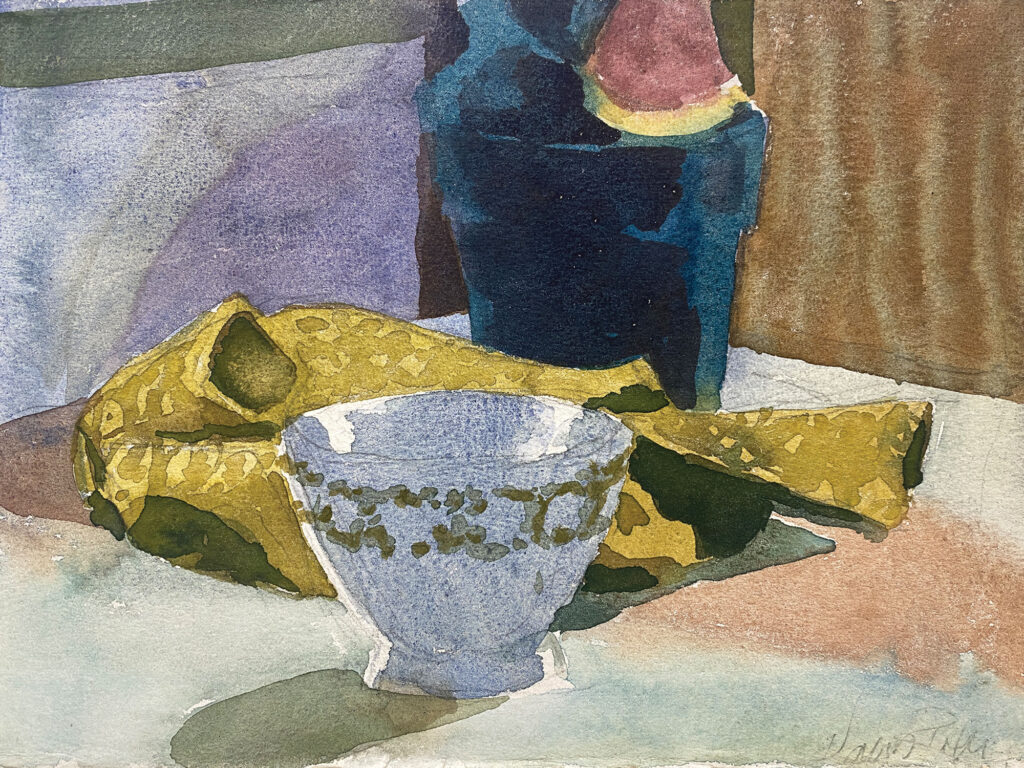
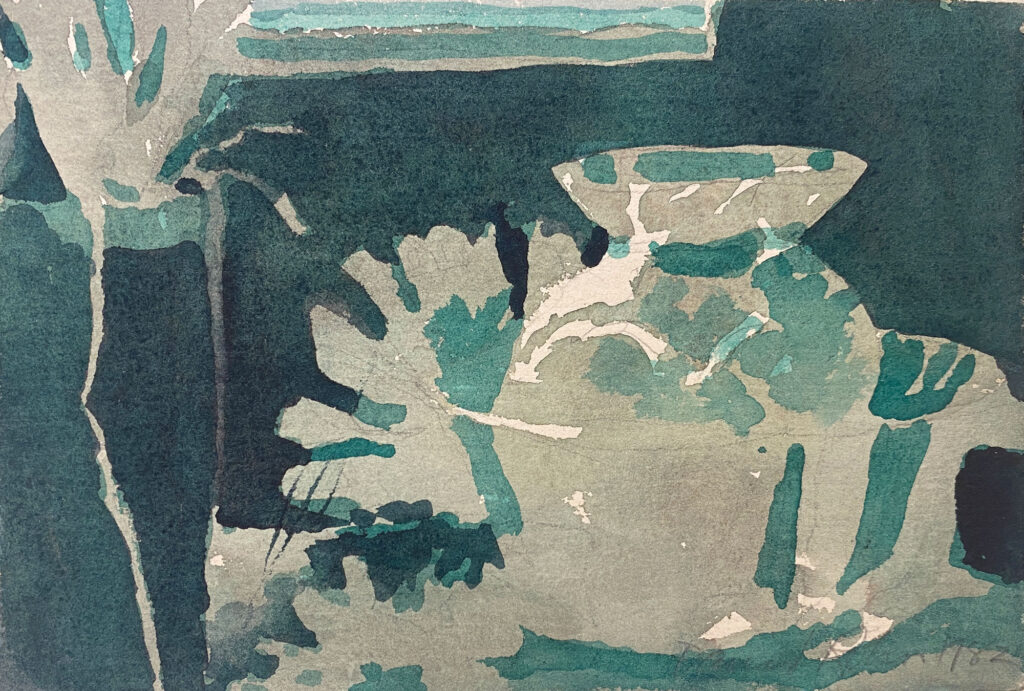
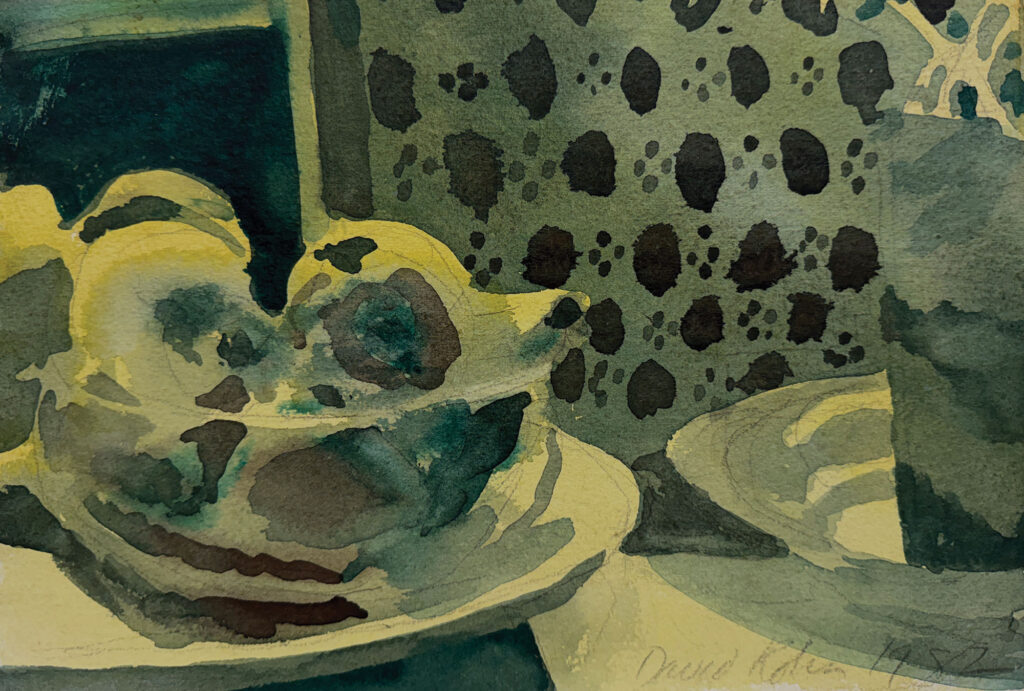
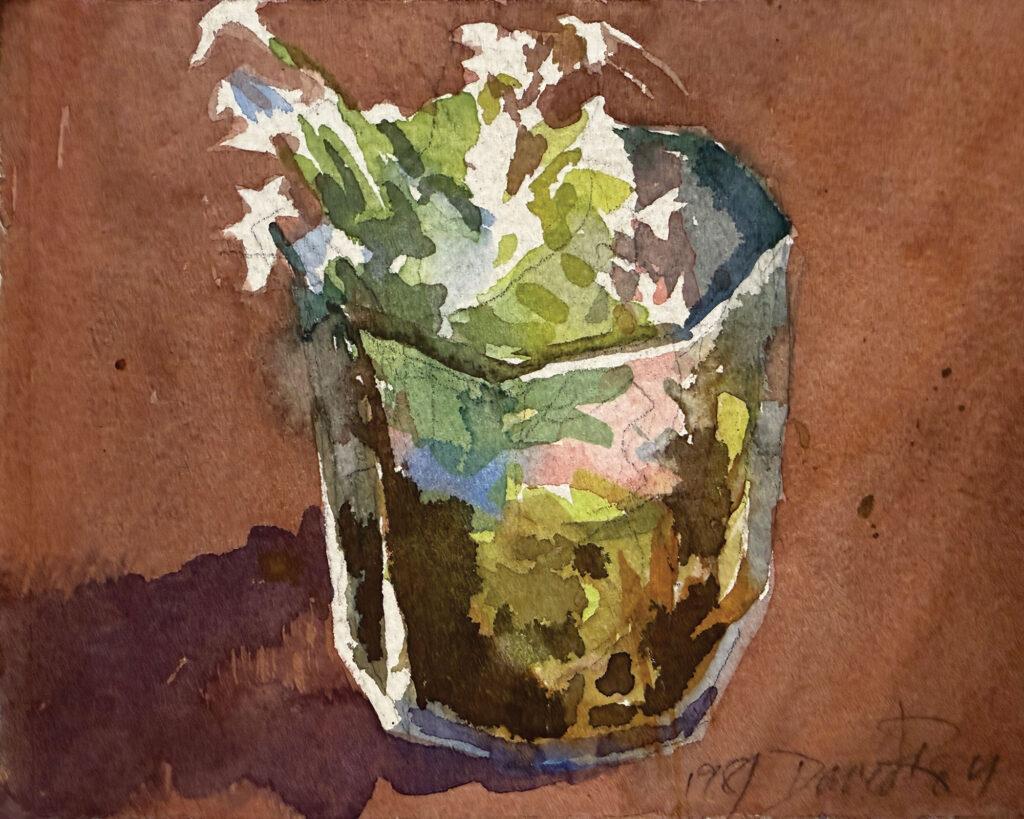
“I see the music between the spaces—I just need to show up for what nature offers … There’s grandeur. Every once in a while, a situation, an arrangement, an architecture in the format, that will come about just through what I’m looking at, and a little bit there … I’ll think, look at this, look at what is given to me, look at that, how that matches that, and this is symmetrical, and this rhythm starts to … whoa, got to do that … So it’s a thrilling life all by myself in my studio.”
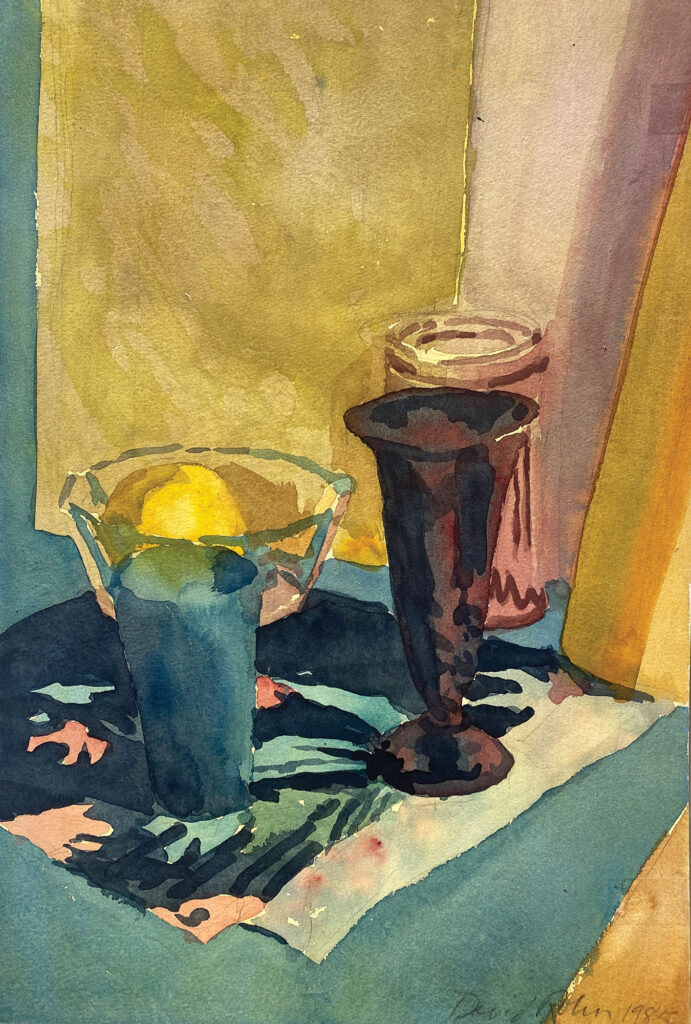
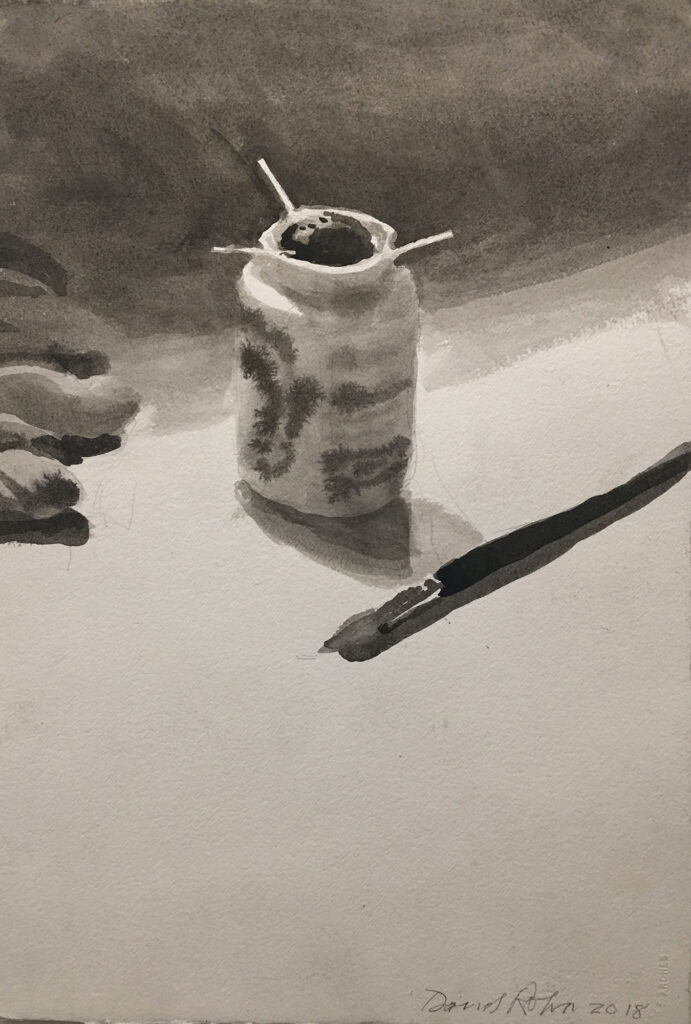
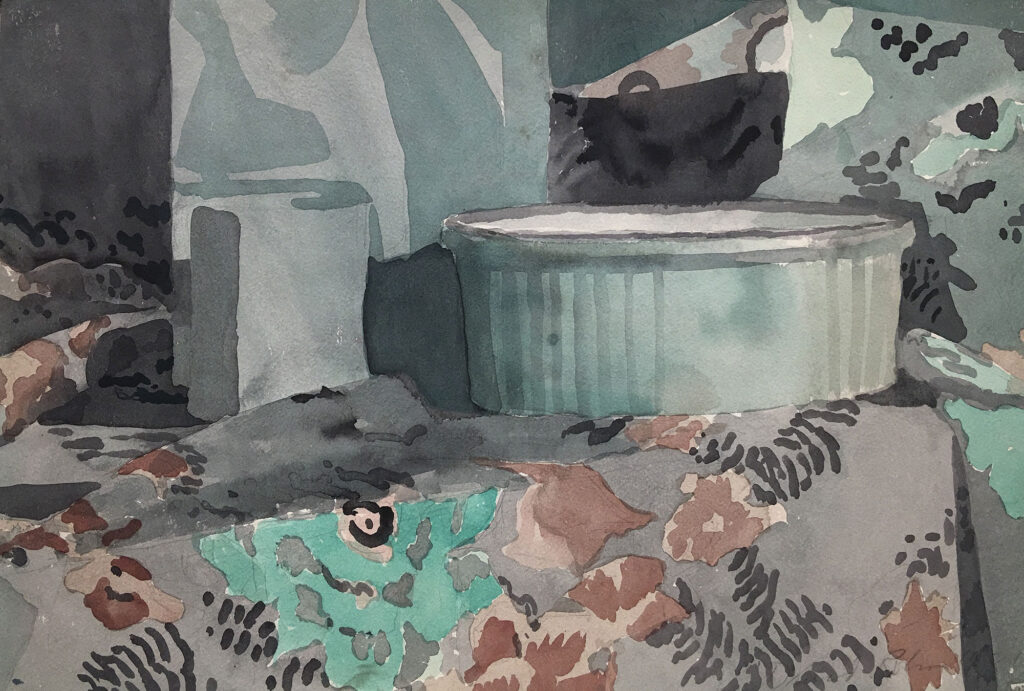
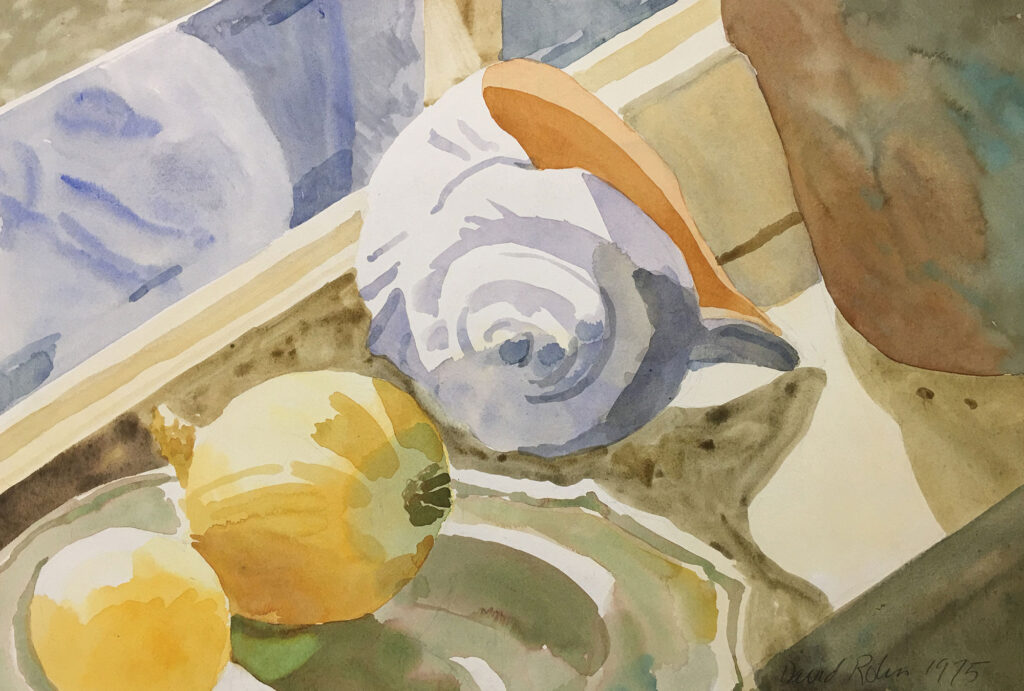
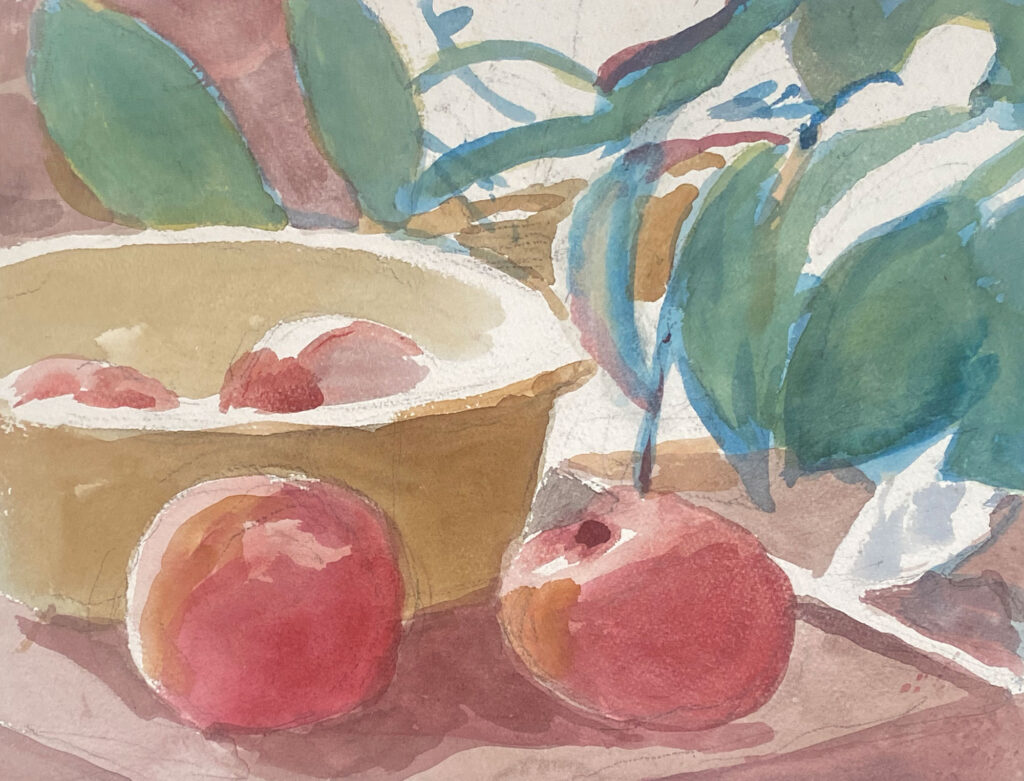
“I can look at nothing long enough until the mind makes it significant. I have faith that my intuitive mind far exceeds the boundaries of my normal mind. So that was the argument is for just throwing yourself into something, madly, and letting intuition take over and see what happens. Can’t do that every day. It comes down to whether you’re good at it or you aren’t, but to find out if you’re good at it you have to be working. ”
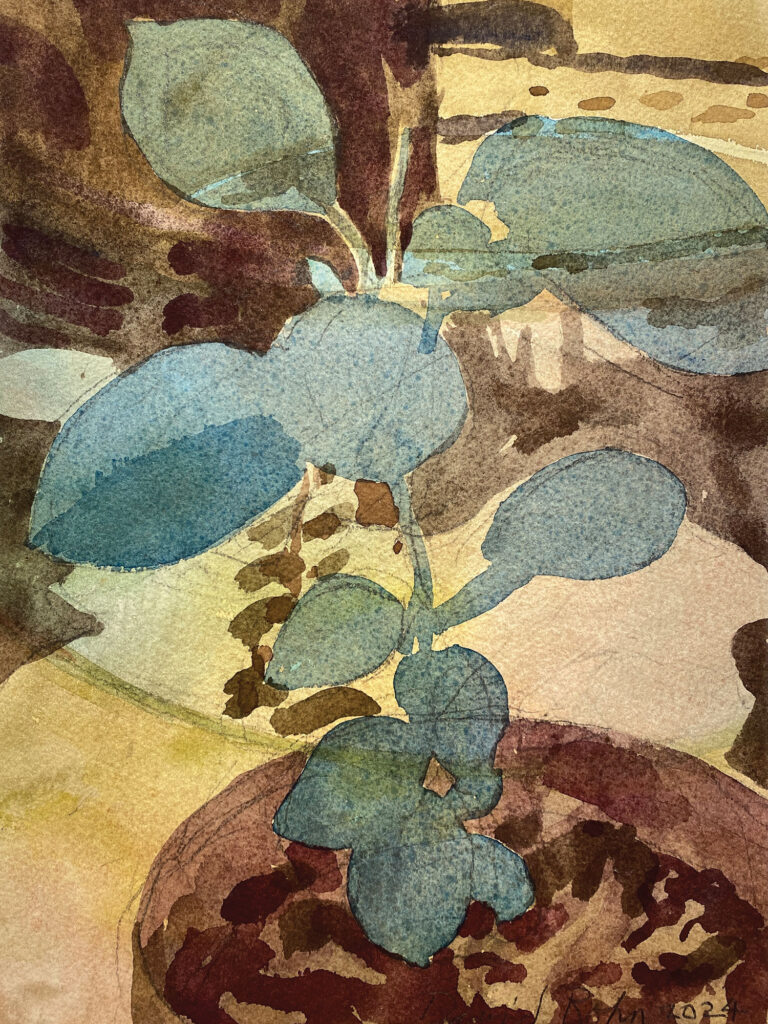
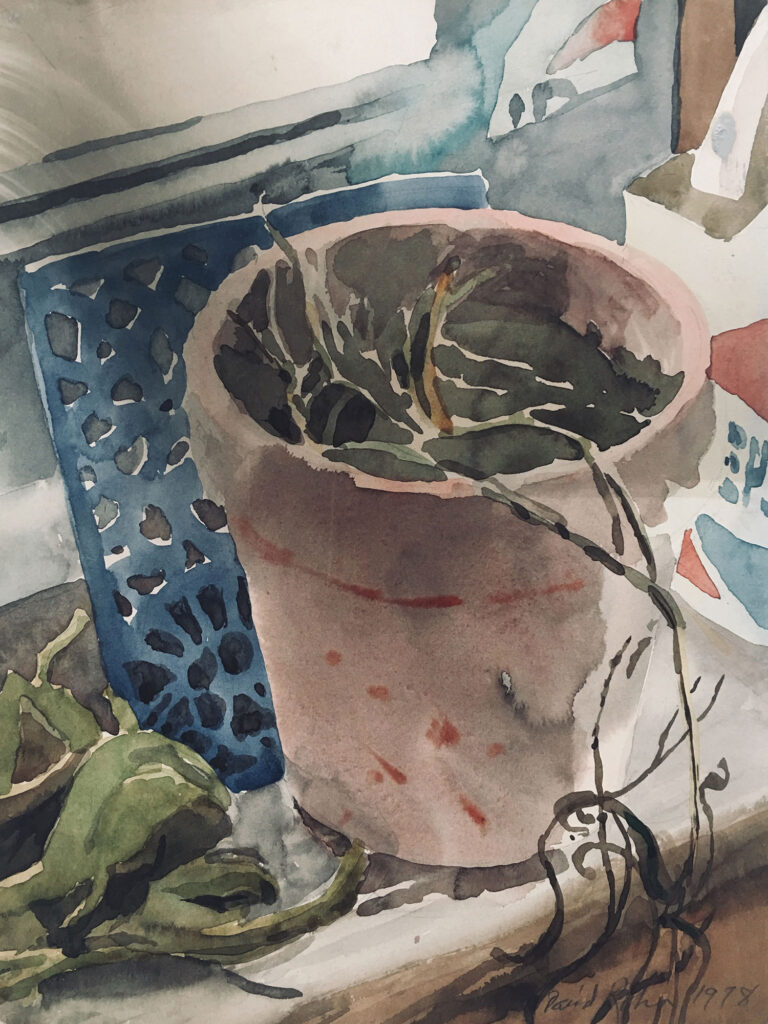
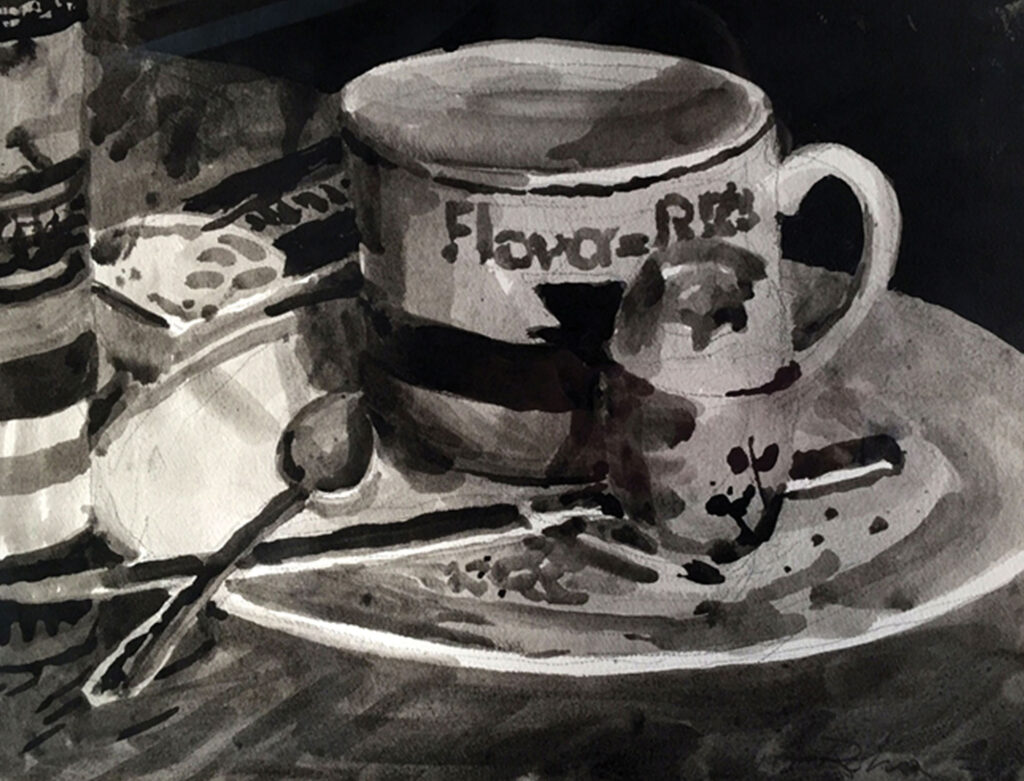
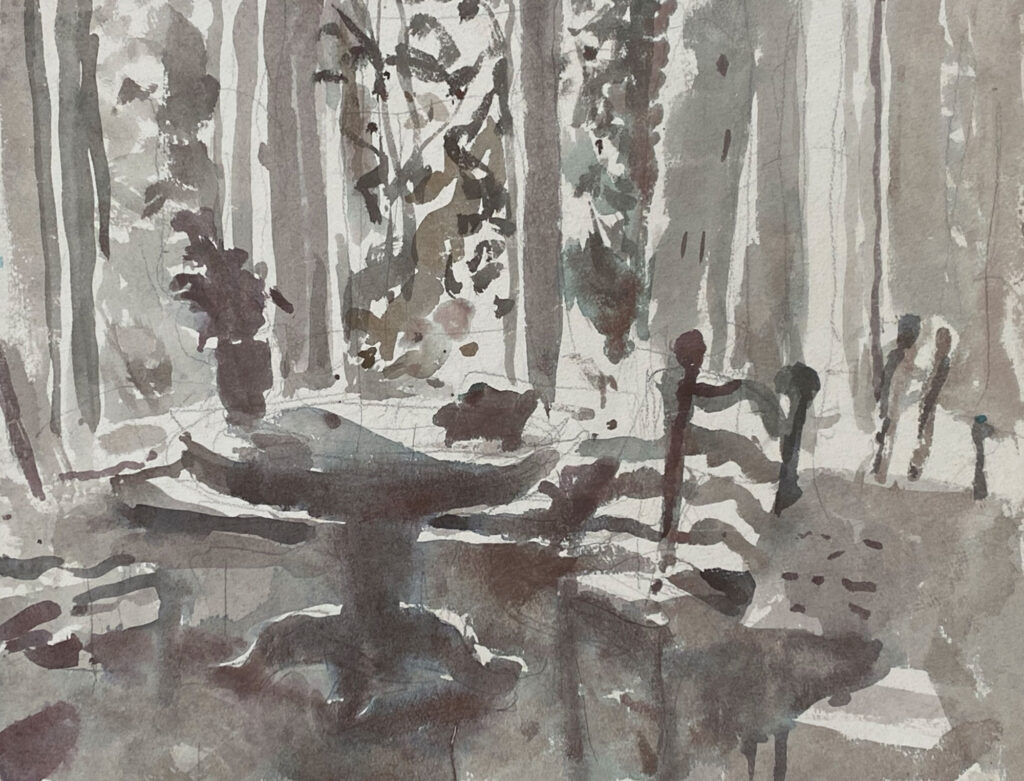
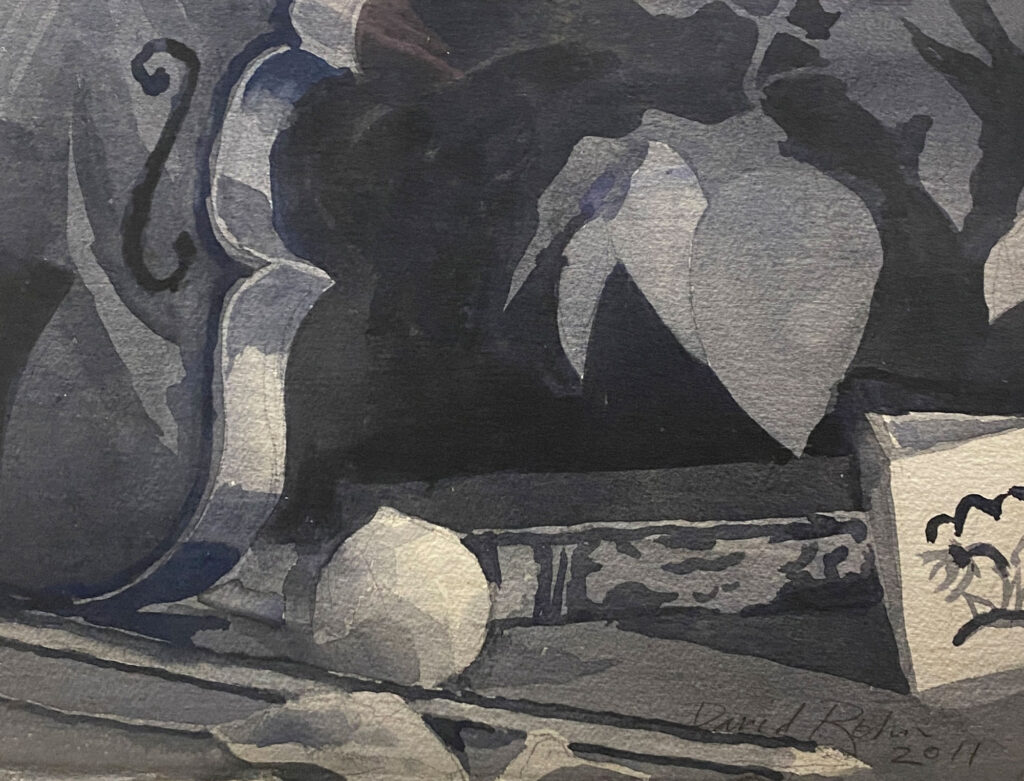
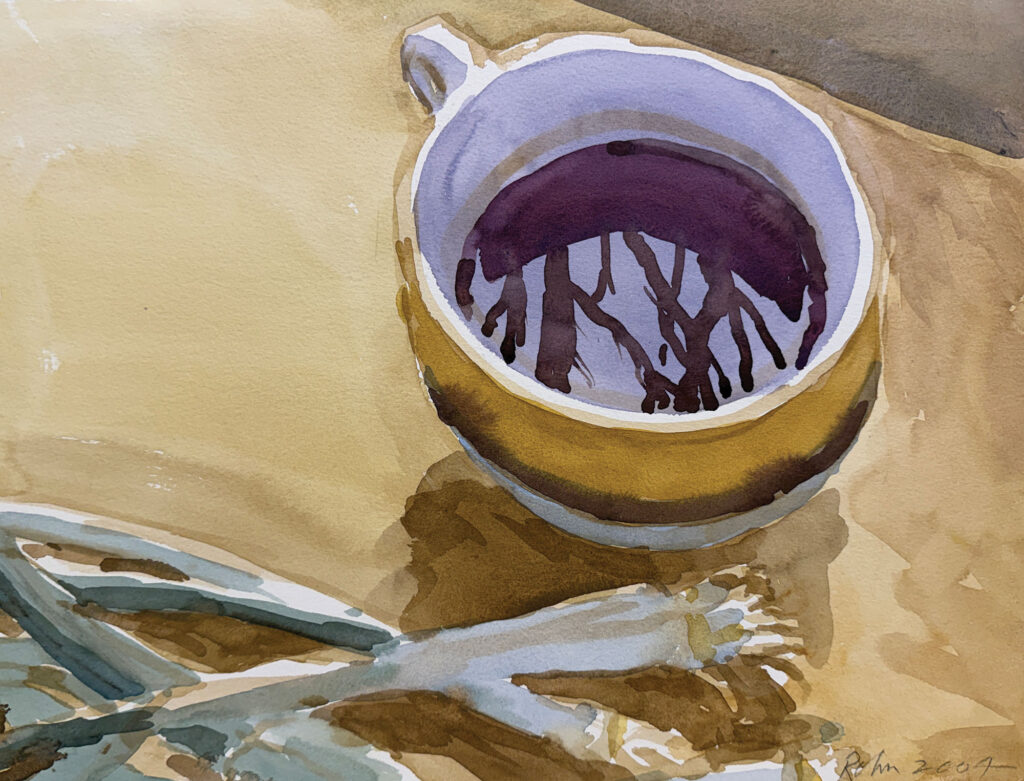
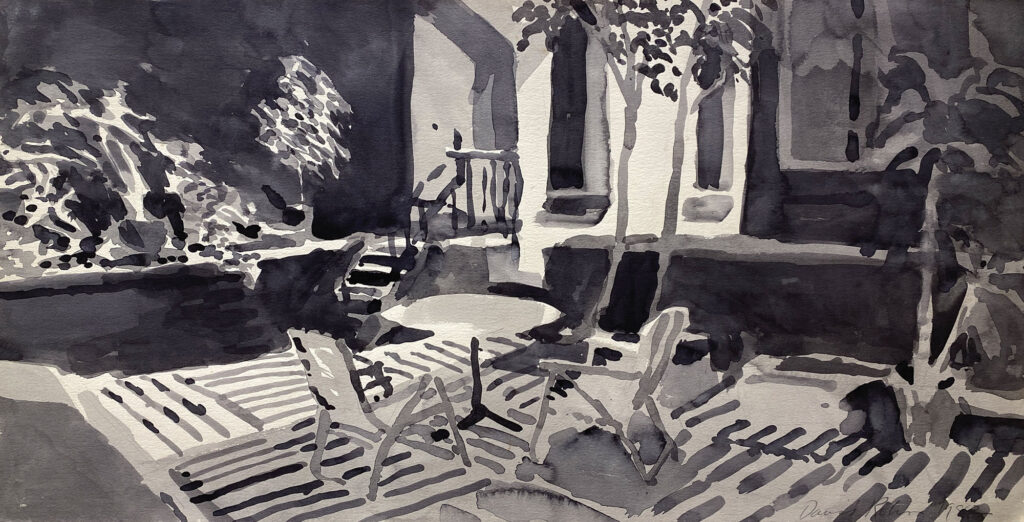
“I’m forgetting grandeur. Grandeur. Pardon me folks, but there’s grandeur. Because every once in a while, a situation, an arrangement, an architecture on the page, in the format that will come about just through what I’m looking at, and a little bit there, and I’ll think, oh this is as if I just discovered a Beethoven Sonata in the trash. Look at this, look at what is given to me, look at that, how that matches that, and this is symmetrical, and this rhythm starts to … whoa, got to do that … So it’s a thrilling life all by myself in my studio.”

David Rohn, clowning around at the Brattleboro Museum & Art Center, during the Keith Haring: Subway Drawings, exhibit, in the Spring of 2023.
Mitchell•Giddings Fine Arts offers contemporary art in a variety of media, featuring emerging and established artists.
Visit us on Main Street in Brattleboro, Vermont.